
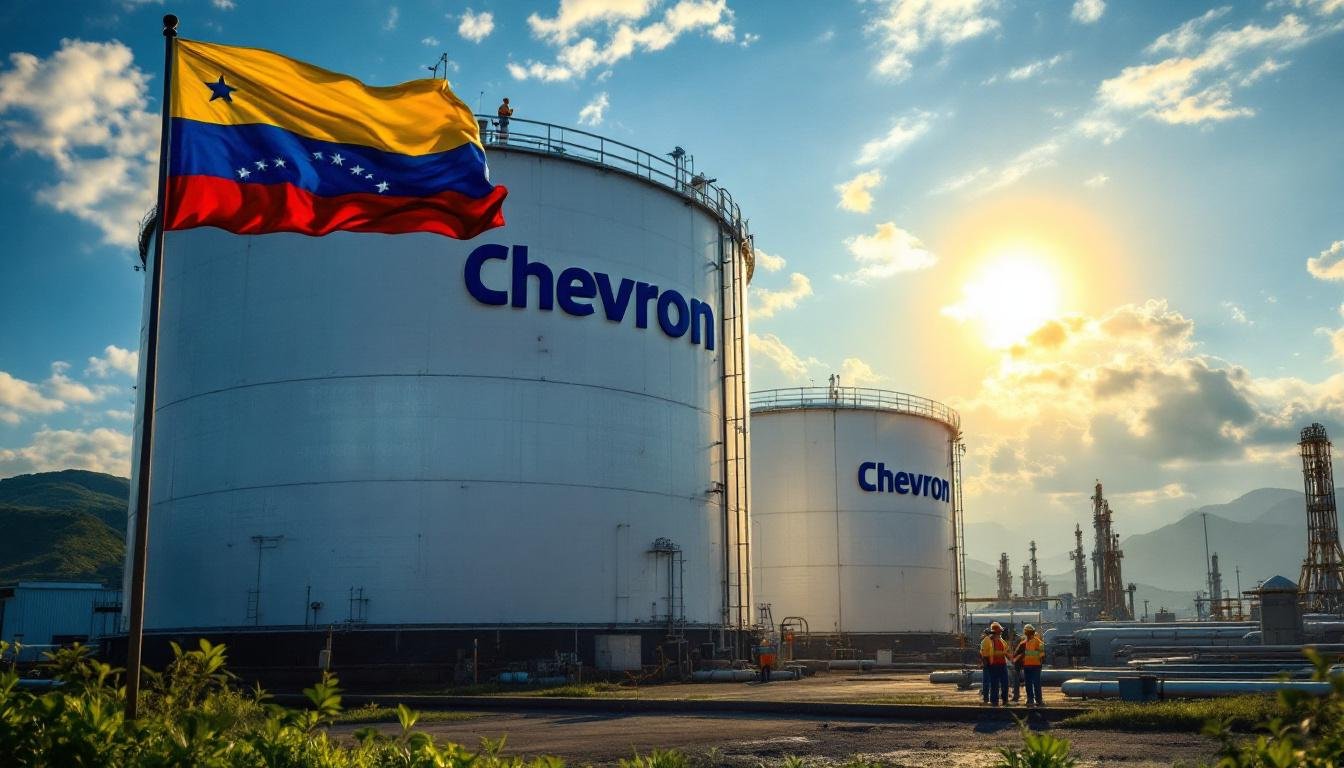
Venezuela’s oil sector is undergoing a cautious revival, led by US energy major Chevron under special licenses that have allowed it to expand operations despite broader sanctions on the government in Caracas. The rebound is reshaping Latin America’s energy landscape and reviving debates over the United States’ use of sanctions as a foreign‑policy tool.
Following years of under‑investment, mismanagement and penalties that slashed production, Venezuela’s output began to recover after Washington granted Chevron limited authorization to operate joint ventures with state oil company PDVSA. Energy analysts note that the company’s activities now account for roughly a quarter of the country’s total oil production, with exports expected to grow further after a renewed authorization in October 2025. The arrangement allows Chevron to use oil shipments to repay debts and cover operating costs, while constraining the Maduro government’s direct access to cash.
This shift has regional and global implications. Increased Venezuelan shipments offer consuming nations an additional source of heavy crude at a time when OPEC+ production decisions and geopolitical disruptions have tightened some market segments. For Latin America, the revival could restore Venezuela as a more significant player in regional energy trade, potentially altering flows between Caribbean refineries, US Gulf Coast facilities and Asian buyers.
The US calculus is complex. Sanctions relief tied to political negotiations aims to incentivize progress on democratic reforms while avoiding a sudden windfall for the Maduro government. Commentaries from policy think tanks stress that easing restrictions is a necessary but not sufficient condition for a sustained recovery, given the sector’s deteriorated infrastructure, skilled‑labour shortages and outstanding creditor claims. At the same time, allowing Chevron to play a central role limits space for rival powers to expand their influence in the country’s oil patch.
Critics argue that the approach risks normalizing relations without securing meaningful political change. Supporters counter that the narrow license structure, coupled with restrictions on transactions involving other sanctioned partners, maintains leverage while addressing energy‑security and humanitarian concerns. They point to gradual improvements in production and export volumes as evidence that carefully calibrated engagement can yield tangible results.
For Venezuela, the road back to its former status as an oil powerhouse remains long. Experts estimate it will take several years of sustained investment to restore fields and infrastructure to even a fraction of past capacity, and broader sanctions relief will likely depend on domestic political developments. Nonetheless, the Chevron‑led revival has already begun to reinsert the country into the regional energy equation, with potential knock‑on effects for investment decisions in neighboring producers and for the balance of US, Chinese and other foreign interests in Latin America’s oil sector.