
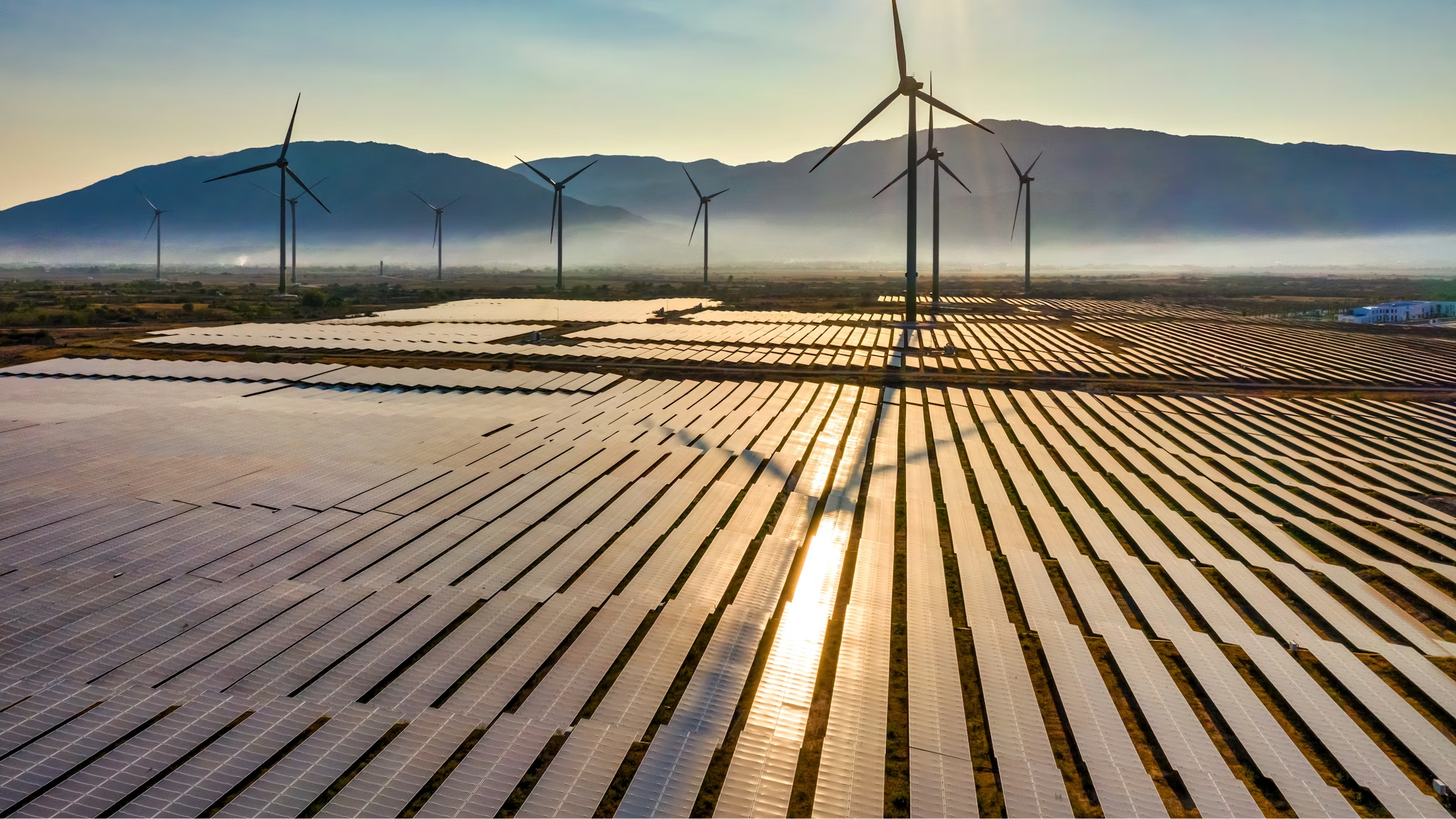
The Philippines has emerged as one of Southeast Asia’s most active markets for energy transactions, drawing interest from regional utilities, global IPPs, infrastructure funds and private equity sponsors. This investor mix reflects not only the country’s sizable power‑sector investment requirements but also broader regional themes of energy transition, security and infrastructure modernization.
Strategic investors, including regional power companies and conglomerates, are pursuing acquisitions and joint ventures to gain scale in renewables and flexible generation, while upgrading legacy assets. Many are motivated by national and corporate decarbonization targets that require rebalancing portfolios toward lower‑carbon sources. Financial investors, meanwhile, are attracted by long‑duration, inflation‑linked cash flows, with some funds looking to aggregate operating projects into yield‑oriented platforms or REIT‑like vehicles.
The Philippine Energy Plan 2023–2050 and successive rounds of Green Energy Auctions provide a long‑term roadmap and contracting mechanism that underpin the bankability of projects. Auctions for onshore and offshore wind, solar and other technologies are designed to crowd in private capital and reduce tariff uncertainty through transparent competition. As the government prepares new auction rounds, developers and investors are racing to secure sites, permits and grid access.
At the same time, the surge in renewable‑project pipelines is exposing bottlenecks in transmission capacity and permitting processes. Grid constraints can delay connections and curtail output, affecting returns unless mitigated by targeted grid investments and improved planning. Regulatory and community‑engagement challenges, particularly for large‑scale wind and transmission projects, also require careful stakeholder management.
Despite these issues, the consensus among sector specialists is that the Philippines will remain a focal point for Southeast Asia’s energy transition capital. The combination of growing demand, supportive policy signals and sizeable decarbonization potential offers a multi‑year runway for deals across generation, networks and enabling infrastructure. How effectively regulators, utilities and investors coordinate on execution will help determine the pace at which the country — and by extension the region — can move toward a cleaner, more secure energy system.