
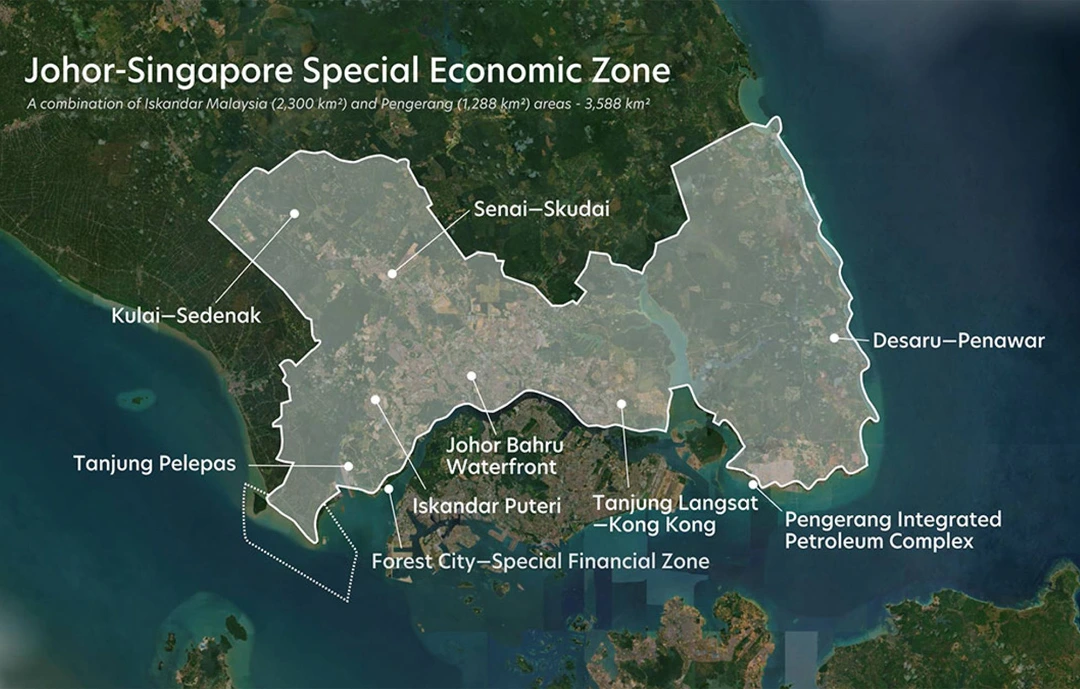
The Johor-Singapore Special Economic Zone (JS-SEZ) promises to transform Malaysia’s southern state’s energy map starting 2026. Local firms ramp up solar, storage, and grid tech to meet industrial and export demands. Energy Exchange Malaysia (Enegem) enables cross-border electricity sales to energy-hungry Singapore.
Rising factories and data centers fuel the boom. Singapore’s net-zero pushes import green power to offset its gas reliance. Johor players scale renewables amid JS-SEZ incentives like tax breaks and fast permits. Small businesses gain from supply chain roles in panels and batteries. Three forces mirror Thailand’s renewables path: policy tweaks, AI-driven demand, and direct power pacts. Johor’s World Bank-backed zones add gigawatts of solar-plus-storage. Critics note greenwashing risks, as seen in Malaysia’s recent lawsuit. Regulators tighten ads on fossil claims to build trust. This corridor unlocks SME opportunities in maintenance and trading. Exports via Enegem could hit record volumes by mid-year. Families in Johor benefit from jobs paying above average wages. Yet, land scarcity and grid bottlenecks pose risks. Policymakers pledge infrastructure bonds to fund lines.
ASEAN integration accelerates with such pacts. Philippines’ Terra Solar and Vietnam’s hydropower funding set precedents. Johor-Singapore eyes 4GW solar complexes backed globally. Investors flock for stable returns in a volatile oil market. Daily commuters across the causeway sense the shift in cleaner air and buzzing economies. The SEZ stands as a model for regional green trade.