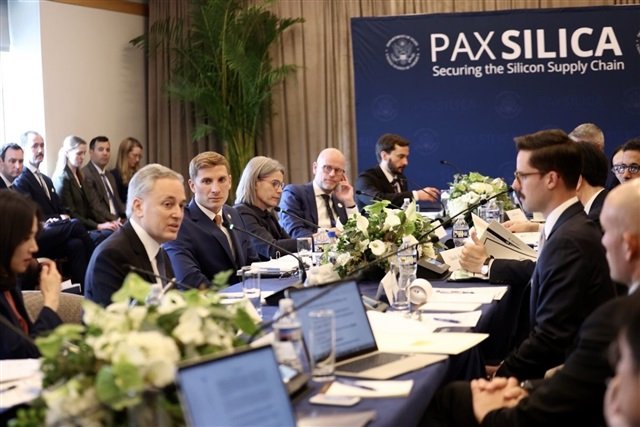
Qatar and the United Arab Emirates have signed onto a pivotal US-led technology pact. The Pax Silica initiative unites nations to safeguard artificial intelligence and semiconductor supply chains. This move accelerates the Gulf’s shift from oil dependency to silicon-driven economies.
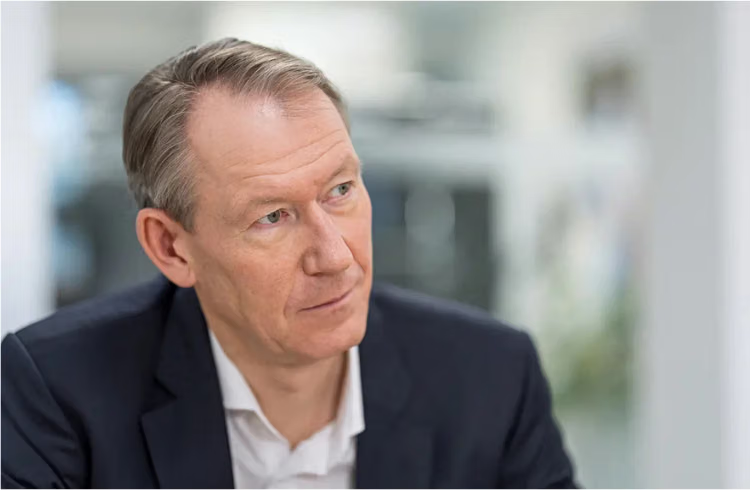
Undersecretary Jacob Helberg announced the Gulf states’ entry after Washington talks. Qatar finalized its commitment immediately, with UAE following on January 15. The coalition already includes Japan, Singapore, UK, Australia, and Israel, pooling industrial strengths for resilience.
Pax Silica targets vulnerabilities across the tech stack. Members secure critical minerals, advanced manufacturing, computing power, and data centers. Helberg called it a coalition of capabilities, not rigid alliances, fostering projects like the India-Middle East-Europe Corridor.
For Qatar and UAE, participation aligns with national visions. Both nations invest billions in AI campuses and chip fabrication. Qatar’s $2.5 billion data center boom pairs with UAE’s Masdar City tech parks, now backed by US supply assurances.
The Trump administration frames this as economic statecraft. Reducing China reliance protects global tech flows amid escalating rivalries. Gulf members gain preferred access to US innovations, from quantum chips to sovereign AI models.
Regional leaders see strategic gains. UAE’s G42 and Qatar’s Ooredoo lead in Arabic large language models. Secure chips enable scaling without foreign bottlenecks, powering smart cities and defense systems.
This pact bridges historic divides. Israel and Gulf states collaborate on AI ethics frameworks during January 16 summits. A Fort Foundry One industrial park in Israel speeds joint ventures, drawing UAE capital.
Businesses rush to leverage the framework. Emirati fabs plan 5nm production by 2028, fed by allied mineral flows. Qatari logistics firms modernize with US robotics, slashing trade times across corridors.
Investors applaud the stability. Gulf sovereign funds allocate 15% to semiconductors, up from 5%. Tokenized chip futures emerge on Dubai exchanges, blending crypto with hardware bets.
Challenges remain in execution. Harmonizing regulations across members demands diplomacy. Yet early wins like shared mineral mapping build trust, projecting $500 billion in chained investments by 2030.
Families feel indirect benefits. Reliable tech powers better healthcare AI and education platforms. Gulf youth train in US-linked academies, filling 1 million tech jobs by decade’s end.
Pax Silica redefines alliances. Tech supplants tanks as security currency, with silicon statecraft guiding policy. Qatar and UAE lead this pivot, proving diversification delivers enduring strength.
Global markets watch closely. Stock in ASML and Nvidia spiked on news, signaling broad impact. The Middle East claims its seat at the silicon table, fueling a new economic order.