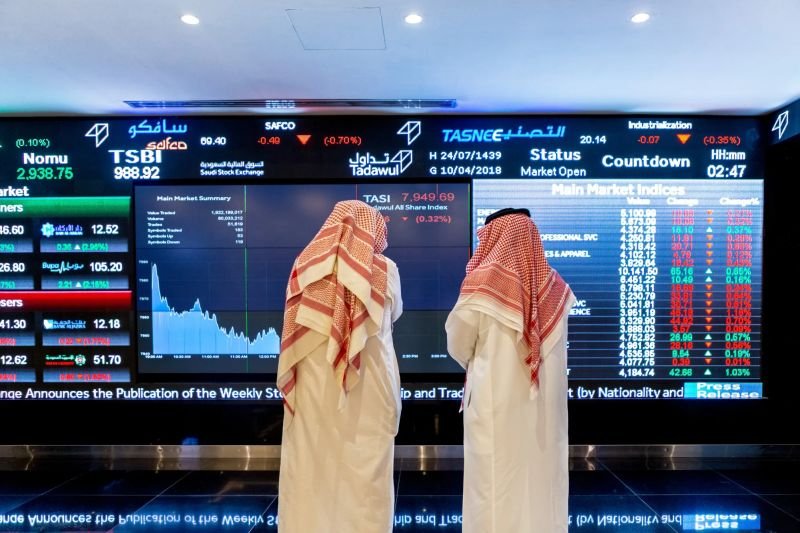
Saudi Arabia’s Capital Market Authority has eliminated the Qualified Foreign Investor program entirely, granting every foreign trader and institution direct entry to the Tadawul main market starting February 1st . This sweeping reform ends years of selective access that required massive $500 million portfolios and lengthy approvals. Brokerage firms across Riyadh now race to scale digital platforms, hire multilingual compliance teams, and launch Sharia-compliant products tailored for Asian family offices and European hedge funds. The kingdom’s $2.5 trillion market cap suddenly feels accessible, with Aramco shares and Al Rajhi Bank poised to see direct ownership without costly swap structures that inflated trading costs by 20-30 basis points.
This transformation lands at the perfect moment for Vision 2030, as Crown Prince Mohammed bin Salman accelerates diversification beyond oil revenues that still dominate 70 percent of GDP. Tadawul already ranks as MSCI Emerging Market territory, but restricted access kept retail foreigners sidelined through expensive ETFs tracking distant indices. Direct trading promises liquidity comparable to India’s post-1991 liberalization, when foreign flows tripled market depth within 18 months. Local brokerage executives predict 25-35 percent volume increases, particularly in sectors like petrochemicals and fintech that align with giga-projects such as NEOM. Saudi families holding listed company stakes express cautious optimism, recognizing that broader participation typically stabilizes valuations while introducing healthy price discovery mechanisms.
Regulators emphasize ironclad anti-money laundering protocols and real-time surveillance systems to prevent the capital flight episodes seen in other emerging markets. Riyadh’s brokerage leaders recruit talent fluent in Islamic finance alongside conventional derivatives, positioning their platforms as bridges between Eastern capital and Western execution. President Trump’s reelection introduces both risks and opportunities—U.S. tariff policies may redirect institutional flows toward Gulf stability, while volatility could test newcomer resolve. Major platforms integrate AI-driven onboarding that verifies identities across 50 jurisdictions within hours, eliminating the paperwork nightmares of prior regimes.
For everyday Saudis, simplified apps will soon connect global portfolios directly to desert wealth creation. Young professionals in finance towers trade alongside London quants, while university programs fast-track locals into algorithmic trading roles. Gulf neighbors like Dubai and Bahrain contemplate mirror reforms to prevent talent and liquidity migration. Brokerage firms launch educational campaigns explaining direct ownership benefits versus funds-of-funds complexity. This openness transforms Riyadh from oil outpost to essential node in global finance networks, where petrodollars meet pension funds in real-time equilibrium. The ripple effects cascade through corporate boardrooms, as CEOs anticipate easier equity raises without foreign investor discounts baked into valuations. Pension funds reallocate billions from U.S. Treasuries toward Tadawul blue chips yielding double-digit dividends. Brokerage revenues surge as commissions multiply across higher volumes and tighter spreads. Families gathering for Thursday dinners now discuss London cousins opening Saudi accounts, closing the wealth gap between expatriate opportunities and homeland growth. Saudi Arabia emerges not merely as destination, but architect of inclusive capital markets where borders dissolve and prosperity compounds.