
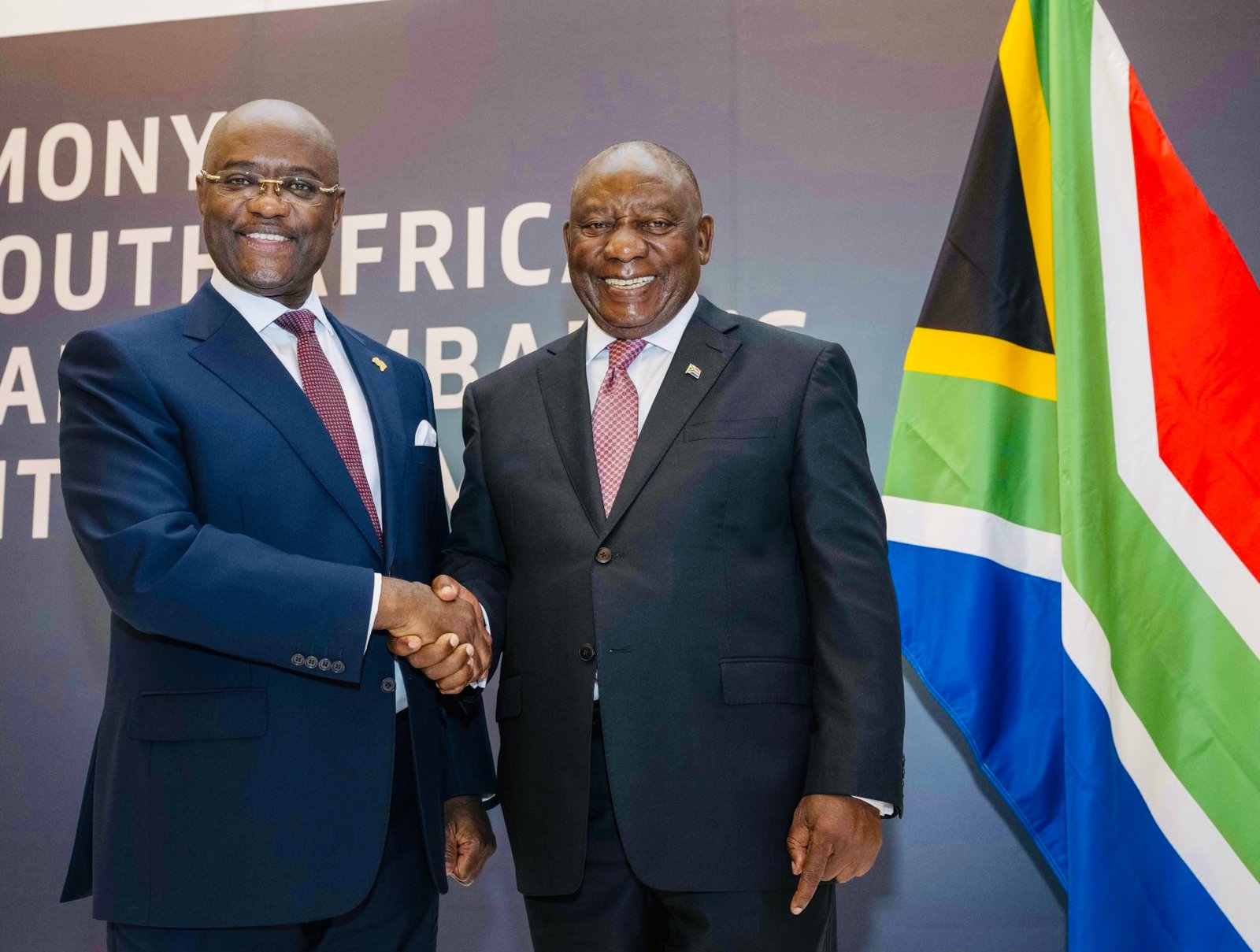
African Export-Import Bank (Afreximbank) confirms readiness to deploy initial US$8 billion financial package supporting South Africa’s accession as full AfCFTA member, targeting infrastructure modernization and export competitiveness restoration. Afreximbank President Professor Benedict Oramah announced Cairo headquarters coordination with Johannesburg following December 2025 membership ratification, positioning trade finance powerhouse as catalyst unlocking continental single market opportunities worth US$3.4 trillion GDP combined. Initial tranche prioritizes US$2.8 billion Transnet port rehabilitation addressing Durban congestion costing exporters R42 billion annually, alongside US$1.8 billion Eskom renewable integration serving 68 million electricity consumers.
South Africa’s AfCFTA entry confronts structural constraints—42 percent port efficiency lag versus Morocco Tanger Med, 28 percent rail freight capacity shortfall versus Nigeria’s Dangote lines, and US$280 billion infrastructure deficit per IMF estimates. Afreximbank’s blended finance fuses US$4.2 billion concessional loans with US$1.2 billion export credit insurance covering 18 manufacturing sectors gaining tariff-free continental access. Renewable energy corridors receive US$920 million green sukuk blending Islamic finance with carbon credit monetization, powering 6.8 million township SMEs transitioning from coal dependency. Brokerages maintain overweight ratings on Absa, Standard Bank citing 22 percent AfCFTA revenue upside through intra-African trade tripling to 18 percent by 2030.
President Trump’s African tariff preferences extension accelerates export diversification, positioning Afreximbank as neutral infrastructure conduit serving Chinese-built ports circumventing US sanctions corridors. Family offices participate through US$28 million feeder funds channeling Afreximbank paper yielding 7.8 percent, capturing US$92 million annualized fees growing 41 percent quarterly. Young Johannesburg treasury managers command R1.2 million salaries mastering AfCFTA rules of origin compliance, securing duty-free textile quotas across 54 markets. Strategic Durban expansion deploys 420 Zulu-speaking relationship managers serving Eswatini garment factories exporting R42 billion annually.
Skeptics cite Eskom debt overhang topping R420 billion, yet Afreximbank’s 92 percent recovery rate through collateralized trade assets crushes sovereign default risks plaguing Zambia precedents. Embedded financing penetrates 68 percent transactions through Afreximbank Trade Finance Facility, powering Richards Bay coal exporters disbursed T+0 yielding 2.1 percent defaults. Pretoria’s strategic alignment hires 280 AfCFTA specialists serving 6,800 exporters during continental customs union rollout. South African Reserve Bank’s forward guidance fortifies exchange controls permitting 18 percent AfCFTA allocation without repatriation delays.
Regional contagion accelerates—Nigeria’s Dangote Refinery licenses Afreximbank LCs across 42 markets serving 68 million consumers, while Kenya’s SGR embeds export credits reaching 14 million East African traders. Developer ecosystem spawns 2,400 plugins monetizing AfCFTA APIs at US$0.18 per shipment scaling toward US$8 billion trade facilitation pool. Brokerages project R280 billion banking revenue uplift through 2028 coinciding African Continental Free Trade Area full implementation. Cairo’s trade finance campus orchestrates 24/7 intelligence where Durban stevedores receive instant LCs converted to township supplier payments during port rehabilitation peaks. Everyday South African exporters transform—East London pineapple farmers access duty-free Algerian markets during harvest surges, while Mpumalanga coal miners finance solar retrofits through green sukuk disbursements. Afreximbank catalyzes continental integration where Johannesburg commodity traders fund Dakar garment factories through programmable LCs, rewriting fragmented trade finance through AfCFTA architecture. This $8 billion package validates pan-African banking supremacy, positioning Cairo as Africa’s trade command center serving 1.4 billion consumers demanding infrastructure unlocking single market potential.