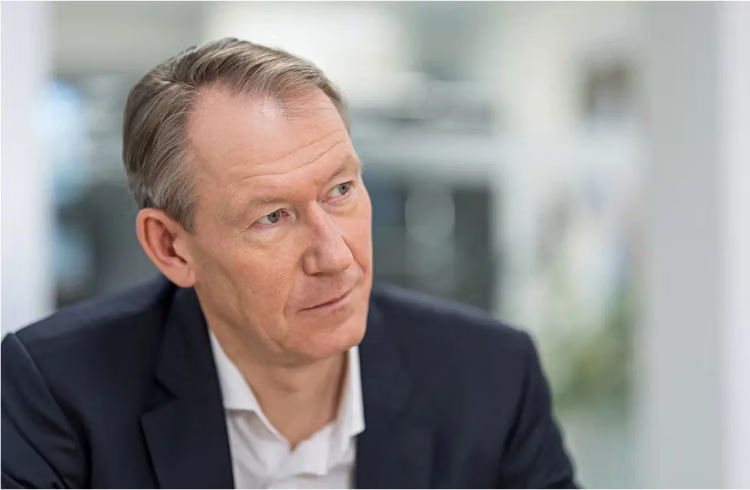

Bank of Sharjah delivered a record first-quarter performance in 2026, reporting a net profit of Dh151 million, up 30 percent from Dh116 million a year earlier. The result is a strong sign that the lender’s core banking business is gaining traction, with higher interest income, better operating performance and growth across key balance sheet lines all contributing to the improvement. In a competitive UAE market, the scale of the quarter stands out because it reflects both growth and discipline.
Net interest income rose 49 percent to Dh215 million, while net operating income increased 26 percent to Dh241 million. Those figures point to a bank that is making better use of its lending and deposit base, while also maintaining control over costs and operations. Profit before tax climbed 28 percent to Dh166 million, which confirms that the gain was not limited to one line item but spread through the business. For a mid-sized lender, that kind of broad improvement is an important signal of momentum.
The balance sheet also strengthened meaningfully. Total assets rose to Dh55 billion, up 13 percent from December 2025, while net loans and advances increased 14 percent to Dh35 billion and customer deposits climbed 16 percent to Dh36 billion. That matters because deposit growth can support future lending, while stronger loan growth often indicates healthier demand from businesses and consumers. The fact that both moved in the right direction suggests the bank is expanding without overreaching.
Capital and efficiency ratios reinforced the message of stability. The bank’s total capital ratio improved by 410 basis points to 17.9 percent, and its cost-to-income ratio remained at 30 percent. Those numbers suggest a lender that is not just growing, but growing efficiently and with room to absorb future shocks. In banking, that combination often matters as much as the headline profit number itself.
The result also fits into a wider story about the UAE banking sector, which has remained resilient even as regional and global conditions have become harder to predict. When a bank like Sharjah posts a record quarter, it adds to the impression that the domestic market still has room to deliver earnings and expansion at the same time. That can help support investor confidence, especially when markets are looking for signs of steady underlying demand.
For customers, the message is equally clear. A stronger Bank of Sharjah can mean more capacity to lend, better service and greater flexibility in a market where competition for deposits and loans remains intense. For the wider sector, the bank’s performance shows that strong balance sheets and healthy demand are still available in the UAE. It is a reminder that even in a cautious environment, growth is still possible for lenders that keep their core business tight and their capital position strong.