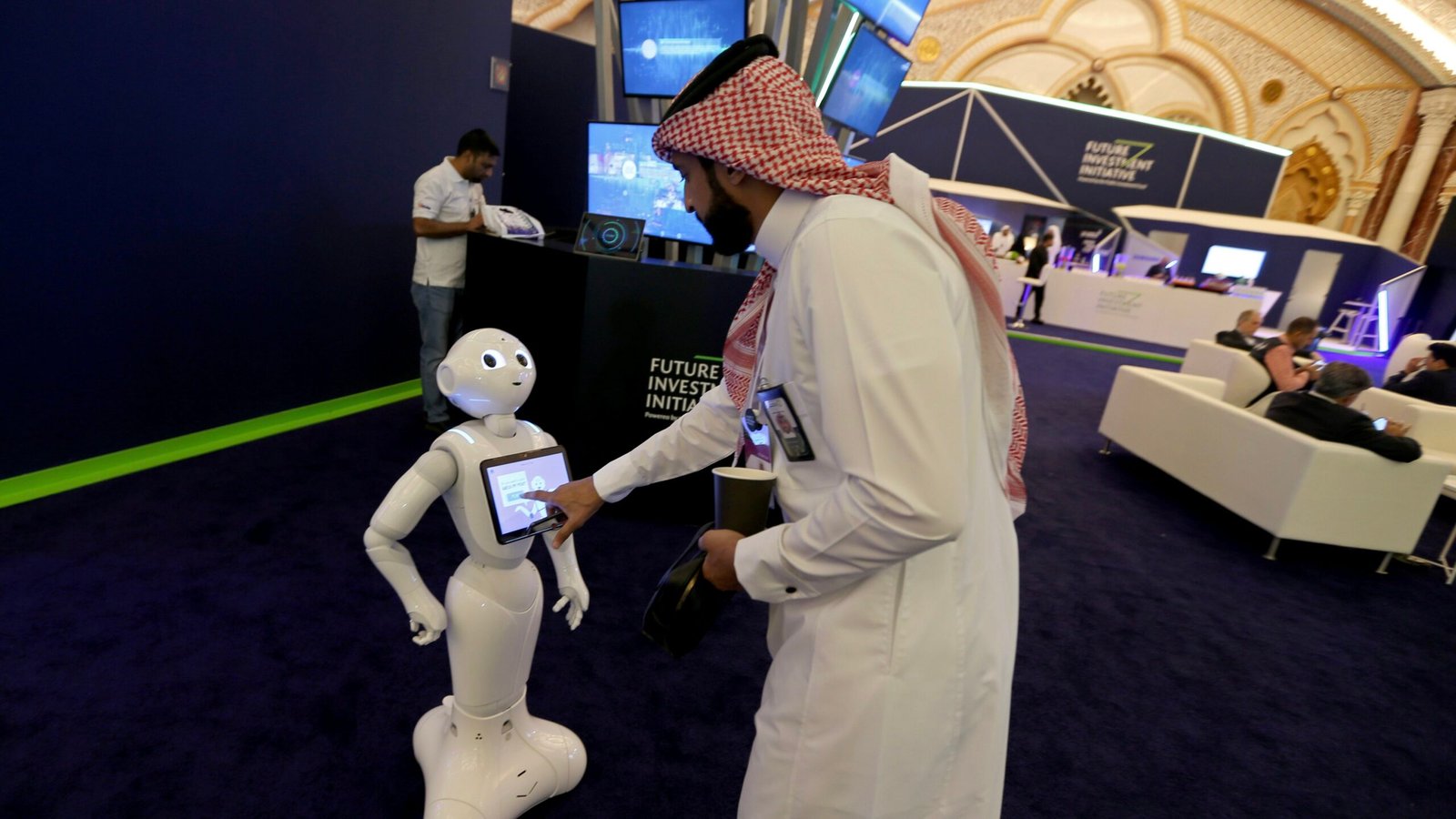
Saudi Arabia is increasingly emerging as one of the more important sources of capital in the global race for artificial intelligence and adjacent frontier technologies. The Kingdom’s strategy is built around a simple advantage: it has the money, the energy and the land to support compute-heavy businesses that need all three. That combination has made Saudi investors more visible not only in AI, but also in the infrastructure that can support long-term technology growth.
At the centre of that effort is Humain, the Saudi state-backed artificial intelligence company created by Crown Prince Mohammed bin Salman. Humain has already secured major financing and partnership interest, including up to $1.2 billion to expand AI and digital infrastructure and a $3 billion investment in xAI before that company was acquired by SpaceX. Those moves show that Saudi capital is no longer just looking for passive returns; it is trying to buy strategic influence in the AI ecosystem.
Humain’s broader ambition is also notable. The company wants to help position Saudi Arabia as a major global AI hub, with plans for large-scale data centre capacity and deep partnerships with technology firms such as Nvidia, Amazon Web Services, AMD and Qualcomm. In practical terms, that means Saudi investors are helping finance the infrastructure behind the next generation of AI services rather than simply funding software applications. That gives the Kingdom more leverage over where the technology economy grows and who benefits from it.
The race is not limited to AI alone. Saudi Arabia’s growing technology investment profile is spilling into space-related systems, cloud computing and advanced manufacturing. The country has long described space as part of its Vision 2030 diversification push, and recent capital commitments suggest that strategy is maturing. As AI systems depend on satellites, data centres and high-performance computing, the lines between AI and space-tech are becoming harder to separate.
That is why Saudi investors may be among the biggest indirect winners in the current global technology cycle. Their capital gives them access to strategic assets, while their infrastructure plans make the Kingdom a more attractive location for partners that need cheap power and huge computing scale. The result is a model that is less about short-term speculation and more about positioning the Kingdom as a foundational technology market.
There are, of course, risks. Middle East conflict has already raised questions about data centre security and cloud reliability, and technology investors are watching the geopolitical environment closely. But Saudi Arabia’s continued spending suggests it is willing to absorb those risks in exchange for a greater role in the future of AI. For global tech firms, that makes the Kingdom not just a market, but a strategic partner. If the current strategy holds, Saudi investors could end up shaping more than the region’s digital future. They may also help decide where the world’s AI infrastructure is built, financed and controlled.