
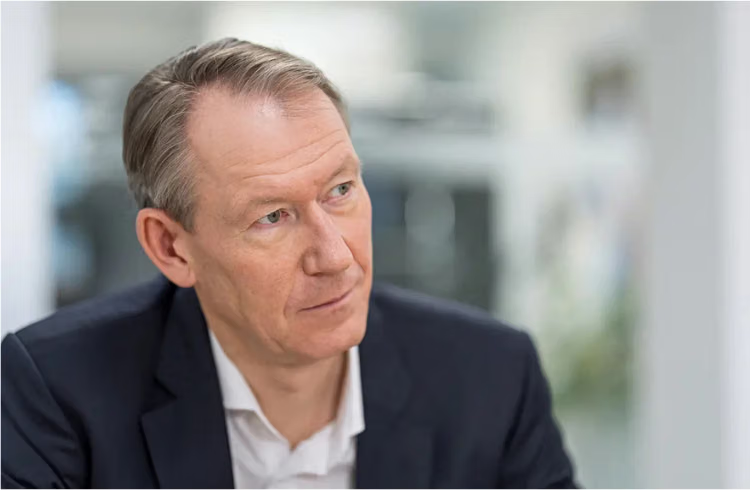
Bosch has named Christian Fischer as its new chief executive officer, with the change taking effect on July 1, 2026. The surprise move replaces Stefan Hartung, who is stepping down after leading the world’s largest automotive supplier through a difficult period marked by weak demand, high costs and job cuts. Bosch said Fischer, currently deputy CEO, will take the top job immediately, making this one of the most important leadership transitions in European industry this year.
The timing stands out because Hartung had only recently secured a contract extension through 2031, which made the handover less expected than a routine succession plan. Bosch later clarified that Hartung’s exit came at his own request and in close consultation with shareholders. That framing suggests the company wanted to present the move as orderly, even if market observers saw it as sudden.
Fischer is not an outsider. He has already played a major role in Bosch’s strategic direction as deputy chairman of the board of management. That internal background may reassure investors and employees who want continuity during a period when the auto industry is under intense pressure from slowing sales, shifting technology and cost discipline. The company has also appointed Markus Forschner and Markus Heyn as vice chairmen, strengthening the management structure around Fischer.
The leadership change matters beyond Bosch itself because the group is central to Europe’s industrial supply chain. As the largest automotive parts supplier in the world, Bosch influences everything from vehicle technology to industrial automation. A CEO transition at this scale can affect product strategy, restructuring pace and investment priorities across its global operations.
Bosch’s recent performance helps explain why governance has become such a focus. The company has been grappling with difficult market conditions, including weaker demand and rising competitive pressure, while trying to stay ahead in the transition to new automotive technologies. In that context, a leader with a deep understanding of the business may be better placed to balance short-term discipline with longer-term transformation.
The appointment also fits a broader European pattern of major companies leaning on internal executives for continuity in uncertain markets. Boards across Europe have been prioritizing stable succession, especially where execution risk is high and confidence needs to be maintained. Bosch’s move shows that logic in action: promote a trusted insider, keep the transition tight, and avoid unnecessary disruption.
For shareholders and customers, the key question now is how Fischer will steer the company through its next phase. The immediate challenge is to maintain operational stability while preserving Bosch’s competitiveness in a tough industrial cycle. If the transition goes smoothly, the company may come out of this leadership change with a clearer strategic line and stronger continuity at the top.
Hello mpharma
I hope you’re doing well.
I am currently a third-year Computer Science student at the National Open University of Nigeria in Lagos with a strong interest in healthcare and technology. I am particularly drawn to your organization because they turned regular community pharmacies into “virtual doctor offices” called multi-doctor.
I am reaching out to inquire about volunteer or internship opportunities. I am available to commit full-time from now until my classes resume in August and would love the opportunity to gain hands-on experience in health technology while contributing my computing skills.
If there is someone on your team I should connect with regarding this, I would greatly appreciate your guidance.
Thank you for your time and consideration.