
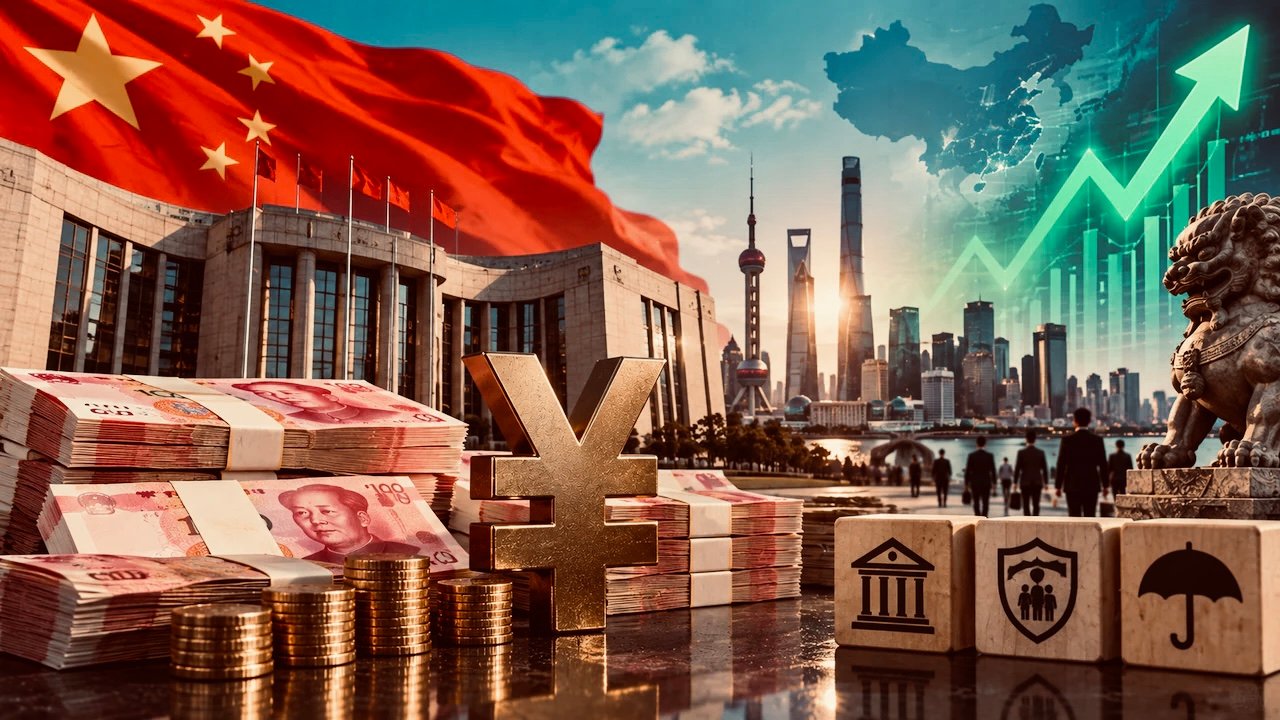
China is moving to reinforce its largest banks with a fresh capital injection worth about $45 billion, a sign that policymakers are preparing for a longer period of slower growth and tighter pressure on lending margins. The recapitalization is aimed at bolstering the financial system’s resilience while keeping credit flowing to the economy, even as demand cools and banks face more strain from weaker profitability.
The plan involves the country’s biggest state-linked lenders and is one of Beijing’s most significant bank support measures in years. It reflects a familiar policy priority in China: preserve confidence in the banking system, prevent a credit squeeze, and ensure state lenders can continue serving as the main transmission channel for economic stimulus.
The need for support comes at a delicate moment. China’s economy has been struggling to regain traction after a prolonged property downturn, softer consumer sentiment and uneven industrial momentum. In that environment, banks are being asked to do more with less, extending loans to support growth while operating under pressure from narrow net interest margins and rising concerns about asset quality.
A recapitalization of this size is not simply a balance-sheet exercise. It also signals that Beijing is willing to use public resources to sustain confidence in the financial system and prevent weakness in the banking sector from spilling into the broader economy. When growth slows, large banks often become the primary policy tool for keeping credit moving, which makes their strength a matter of macroeconomic strategy rather than just sector management.
The move has also sparked market caution. Shares in the banks and insurers tied to the support plan reportedly fell after the announcement, suggesting investors remain uneasy about the cost of repeated interventions and about the longer-term pressure on returns. That reaction reflects a broader concern that capital injections may help stability now, but could also signal deeper structural challenges in the financial system.
Still, the policy logic is straightforward. Chinese banks remain central to funding local governments, state enterprises, property developers and private firms, and any deterioration in their lending capacity could quickly ripple through the economy. By injecting fresh capital, authorities are aiming to protect lending capacity, absorb future losses and keep the system positioned to support growth targets.
The timing of the move is important too. China has already been using a mix of liquidity tools, fiscal support and targeted sector measures to defend growth, but the latest recapitalization suggests officials see banking strength as a necessary foundation for the next stage of support. In practical terms, stronger capital buffers give lenders more room to expand credit, write loans, and withstand shocks without immediately cutting back on financing.
The banking sector itself is under structural strain. As economic growth slows, demand for higher-yielding loans has softened, while competition for quality borrowers has intensified. At the same time, banks are carrying the policy burden of keeping financing affordable, which limits how much they can widen margins even when capital conditions are tightened.
That tension between policy goals and commercial realities is one reason the recapitalization matters. It is designed not only to stabilize the largest lenders but also to preserve the state’s ability to steer credit in the direction it wants. In China’s system, the big banks are not just financial institutions; they are instruments of economic management.
The broader market context adds another layer. Globally, financial institutions are under pressure to balance prudence and growth, but China’s banks face a more concentrated challenge because they are tightly linked to domestic policy goals. When the state asks banks to lend more into a slower economy, stronger capital is essential to absorb the risk that follows.
For investors, the key question is whether this support marks a temporary stabilizer or the beginning of a more sustained recapitalization cycle. If growth remains weak or property stress lingers, more measures could follow. If the economy steadies, the new capital could be enough to buy time and restore confidence without further escalation.
The market also appears to be reading the signal with caution rather than panic. A state-led recapitalization can reassure depositors and counterparties, but it also reminds investors that underlying growth problems have not disappeared. That is why the policy is best understood as defensive: it is intended to preserve the banking system’s ability to keep lending, not to suggest that the underlying economic drag has already been solved.
For the wider Chinese economy, the implications are substantial. Banks remain the main source of funding for corporate investment, household borrowing and local development projects. If their capital positions are stronger, they can keep extending credit for longer, which helps smooth the transition through a weaker growth period.
That support, however, comes with a trade-off. Every large capital injection underscores the scale of the challenge policymakers face in trying to preserve stability while encouraging a healthier growth model. Banks may be stronger after the recapitalization, but the fact that such support is needed at all shows how much pressure remains in the system.
In that sense, the latest move is less a one-off rescue than part of a broader economic strategy. Beijing is signaling that it will continue to stand behind its biggest banks because their stability is inseparable from the country’s growth ambitions. The message to markets is clear: credit support will stay central, and the state is prepared to pay for it.
China’s banking sector is entering a more demanding phase, one defined by weaker loan demand, tighter profitability and a more complex policy environment. The $45 billion recapitalization is meant to buy resilience, sustain confidence and keep the lending machine operating, even as the economy works through deeper structural pressures. At its core, this is a story about control. Beijing wants its biggest banks strong enough to support growth, absorb losses and defend stability, and it is once again willing to use capital to make that happen.
