
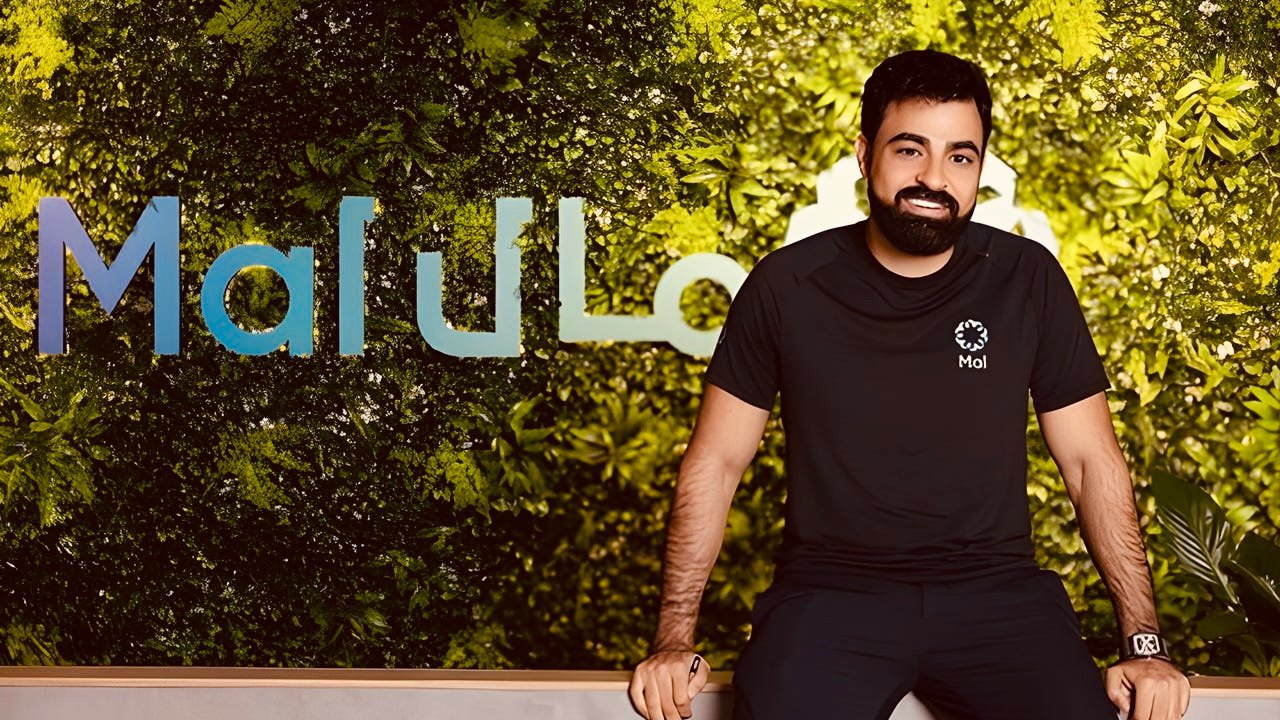
Middle East fintech funding may have cooled in 2026, but one company has dominated the regional conversation. Abu Dhabi-based Mal, which is building what it describes as the world’s first AI-native Islamic digital bank, secured a $230 million seed round that accounted for 37% of all fintech funding in the Middle East and North Africa in the first half of the year.
That single transaction says a lot about the current state of the regional fintech market. Funding has not disappeared, but it has become more concentrated, with a small number of large rounds carrying the headline numbers. According to Magnitt, total MENA fintech funding fell 9% year on year in the first half of 2026 to $617 million, which means Mal’s raise was large enough to distort the overall picture.
The scale of the deal matters because it reflects both investor confidence and strategic ambition. Mal is not positioning itself as just another payments or consumer-finance app. It is trying to build a regulated, technology-first, Sharia-compliant banking platform that can serve a broader user base across markets. That gives the company a stronger story than a standard early-stage startup.
The company’s momentum has been helped by regulatory progress. It received in-principle approval from the Central Bank of the UAE and later opened a global waitlist, signaling that it is moving beyond concept and toward product rollout. For a fintech that wants to operate as a banking platform, that kind of regulatory foundation is essential.
The funding round was also notable because it came at a time when the broader market was under pressure. The UAE and Saudi Arabia captured 85% of MENA fintech funding in the period, showing how concentrated the capital has become. In other words, the money is still there, but it is flowing to a narrower set of hubs and companies with strong narratives.
That concentration is not necessarily a weakness. It can also show that investors are still willing to back scale when the model is convincing. Mal sits at the intersection of several themes that continue to attract capital: digital banking, Islamic finance, artificial intelligence, and cross-border product ambition. Those themes make it stand out in a crowded and increasingly selective funding environment.
The company’s positioning also matters in a region where consumers are becoming more comfortable with app-based financial services. Users increasingly expect faster onboarding, simpler interfaces and more integrated products, which gives AI-driven platforms a chance to compete with traditional banking channels. Mal’s pitch is that technology can improve both user experience and compliance.
Its seed round also raises the question of whether more fintech funding could follow if investors see enough progress. For now, the sector’s recovery remains uneven. Some rounds are still being done at meaningful scale, but the market is not broad-based, and many companies are still struggling to raise follow-on capital.
Still, Mal’s progress suggests that there is room for a stronger second act in MENA fintech. The region has a large underbanked and digitally aware population, a growing appetite for financial innovation and an expanding set of regulatory frameworks that can support more complex products. Those ingredients create a path for well-capitalized platforms to grow.
For Abu Dhabi, the company is also another sign of the emirate’s desire to position itself as a serious fintech and digital finance hub. The local ecosystem has been working to attract founders, capital and regulatory attention, and Mal’s combination of seed funding and licensing momentum fits that strategy neatly.
The broader lesson is that the regional fintech story is no longer just about the number of deals. It is about quality, ambition and execution. A handful of well-funded players can shape the market narrative, and Mal has clearly done that in 2026.
Whether the company becomes a breakout bank or remains a high-profile startup will depend on execution, regulatory rollout and customer adoption. But for now, the funding round alone is enough to show that investors still believe the Middle East can produce globally relevant fintech platforms, especially when the story combines finance, technology and Sharia compliance in one package. The deal may not revive the whole market, but it has given the sector a rare flagship moment. In a year when regional fintech funding has been uneven, Mal has become the clearest proof that the Middle East still has the capacity to produce category-defining financial companies.
