
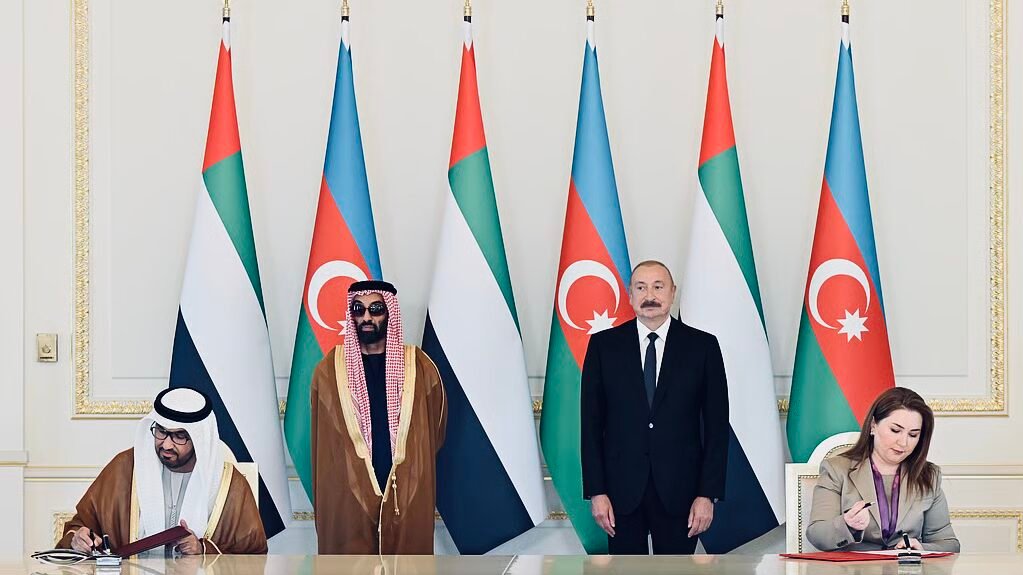
Abu Dhabi Future Energy Company, known as Masdar, has signed an agreement with Azerbaijan Green Energy Company to explore new renewable-energy projects in Azerbaijan. The plans include a major expansion of Masdar’s existing Garadagh solar plant, battery storage and a separate round-the-clock renewable-power project.
The proposed expansion would add at least 350 megawatts of solar capacity to the existing 230MW Garadagh Solar PV plant. The companies will also examine the addition of a battery energy-storage system with capacity of up to 200 megawatt-hours.
The agreement reflects a broader shift in renewable energy. Solar power is becoming cheaper and more widely deployed, but its output changes with sunlight. Battery storage can help hold excess electricity and release it when generation falls, improving the reliability and flexibility of solar projects.
For Azerbaijan, the partnership supports plans to expand renewable generation and strengthen its energy system. The country has traditionally been associated with oil and gas, but it is increasingly exploring solar, wind and other clean-energy opportunities.
Masdar’s role gives the project access to an experienced international renewable-energy developer. The company has built projects across several markets and is now seeking to expand its presence in Azerbaijan through a combination of solar generation, storage and continuous clean-power solutions.
The Garadagh expansion would more than double the plant’s current solar capacity if the full proposed 350MW addition proceeds. That would create a substantially larger renewable-energy asset and increase the amount of electricity available from the site.
The inclusion of battery storage is particularly important. A solar plant produces electricity most strongly during daylight hours, while demand can remain high after sunset. Batteries can shift part of the generation profile, helping the project supply electricity during periods when solar output is lower.
Storage can also help manage fluctuations and support grid stability. When renewable generation changes quickly because of cloud cover or demand shifts, batteries can respond faster than many conventional power plants. That makes solar-plus-storage projects more useful as renewable capacity expands.
The companies will also assess a 100MW round-the-clock renewable-energy project. The aim is to move beyond the traditional model of supplying power only when renewable generation is available and instead provide more consistent output through a combination of generation and storage.
Masdar said the concept builds on its work in Abu Dhabi, where it is developing a large gigascale renewable project combining 5.2 gigawatts of solar photovoltaic capacity with a 19GWh battery system. That project is intended to deliver 1GW of continuous renewable power and reached financial close in July 2026.
The Azerbaijan proposal shows how Masdar is seeking to transfer experience from one market to another. Round-the-clock clean power requires careful design, detailed demand analysis and sufficient storage capacity. It also requires strong grid connections and clear agreements on how electricity will be dispatched.
The collaboration agreement does not mean all projects have reached final investment approval. The parties are still exploring the potential expansion, storage system and round-the-clock project. Detailed engineering, financing, permits and power-purchase arrangements will determine whether the proposals move into construction.
A separate development has already reached a more advanced stage. Masdar and SOCAR Green announced financial close for the 315MW Neftchala Solar PV project. Financial close means the project has secured the financing needed to proceed with implementation.
The Neftchala project adds momentum to Azerbaijan’s renewable-energy programme. It also shows that Masdar’s cooperation with Azerbaijani partners is moving beyond initial announcements toward projects backed by financial commitments.
Renewable projects can provide several benefits to Azerbaijan. They can diversify the electricity mix, reduce dependence on gas-fired generation, support emissions goals and create demand for construction, engineering and maintenance services. Large projects may also help develop local expertise in clean-energy operations.
The country’s location gives renewable power an additional strategic dimension. Azerbaijan has links to regional electricity markets, and future clean-energy projects could eventually support exports or cross-border cooperation. That opportunity would depend on transmission capacity, market rules and regional demand.
For the UAE, Masdar’s expansion strengthens Abu Dhabi’s role as a global renewable-energy hub. The company is using its domestic experience to develop projects abroad, linking the emirate’s capital, technology and energy expertise with markets seeking new sources of clean power.
The project also demonstrates how energy companies are balancing scale with reliability. Building solar capacity is only one part of the challenge. Developers must also make renewable power useful to grids that need stable supply throughout the day and night.
Battery storage will become increasingly important as countries add more variable renewable generation. Without storage or other flexibility tools, large volumes of solar power can create periods of oversupply followed by shortages after sunset. Storage helps smooth those changes and improve the value of renewable electricity.
The proposed 100MW round-the-clock project could become a test of how renewable power can replace more conventional generation for continuous supply. If successful, the model could be adapted in other markets with strong solar resources and growing electricity demand.
There are also commercial questions. Battery systems add capital costs, and their economics depend on equipment prices, financing terms, electricity tariffs and the value assigned to grid flexibility. Long-term contracts and supportive regulation will be important for project viability.
Masdar’s agreement comes during a period when Middle Eastern energy companies are diversifying while traditional oil and gas infrastructure faces new security and market pressures. Renewable projects can provide another source of long-term growth and help companies build capabilities beyond hydrocarbons.
For Azerbaijan, the partnership offers access to capital and technical expertise. For Masdar, it creates an opportunity to expand an established solar platform and demonstrate advanced storage solutions. For the region, it shows how Gulf energy companies are becoming major international players in clean power.
The immediate next step will be feasibility work and project development. If the proposals advance, Azerbaijan could gain at least 350MW of additional solar capacity, up to 200MWh of storage and a new pathway toward continuous renewable electricity. Masdar’s latest agreement therefore represents more than a solar expansion. It combines generation, storage and reliable power delivery, reflecting the next stage of renewable-energy development in which clean electricity must be available when consumers need it, not only when the sun is shining.
