
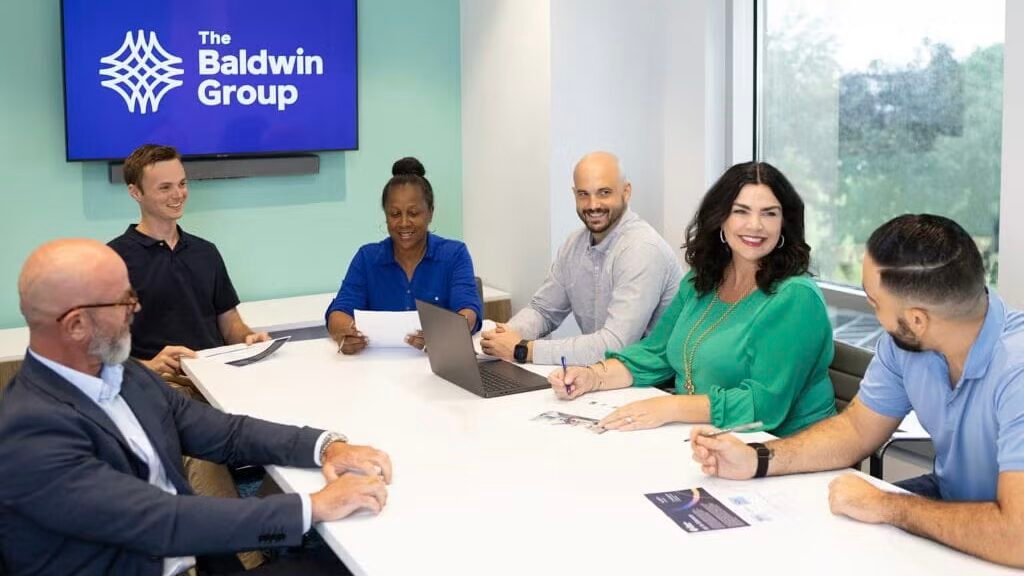
The Baldwin Insurance Group has agreed to be taken private in a transaction valued at approximately $7.7 billion, including debt. The deal is being led by Sequence Holdings and DFO Management, the family investment office of Dell Technologies founder and CEO Michael Dell.
Under the agreement, Baldwin shareholders will receive $32.50 in cash for each share. The offer represents an 88% premium to Baldwin’s unaffected closing price on June 17, before media reports first emerged about a potential transaction.
The purchase price includes approximately $4.6 billion of equity value and about $3.1 billion of net debt that the buyers will assume or refinance. Once the deal closes, Baldwin will become a privately held company and its shares will no longer be listed on Nasdaq.
The transaction is expected to close during the first quarter of 2027. It remains subject to approval by Baldwin shareholders, regulatory clearances and other customary closing conditions. The company’s board has approved the agreement, but the process is not complete until the required approvals are received.
Baldwin is an insurance brokerage rather than a traditional insurer that assumes underwriting risk. Brokers help clients identify coverage, compare policies, negotiate terms and manage relationships with insurance carriers. Their revenue usually comes from commissions and fees, making growth depend heavily on client relationships, acquisitions and industry expertise.
The take-private deal gives Baldwin a new ownership structure at a time when insurance brokers are investing heavily in technology. The buyers said the transaction would provide the company with greater flexibility to pursue artificial-intelligence investments and long-term growth.
That flexibility is important because public companies operate under regular market scrutiny. They must report quarterly results, respond to short-term investor expectations and balance investment against immediate profitability. Private ownership can give management more time to develop technology, integrate acquisitions and pursue strategic initiatives.
Sequence Holdings brings engineering talent and capital to the transaction, while DFO Management provides long-duration, founder-aligned capital. The combination suggests that the buyers view Baldwin as a platform for operational and technological expansion rather than simply a financial investment.
Artificial intelligence could influence several parts of Baldwin’s business. Brokers can use AI to organise client data, identify coverage gaps, automate routine administrative work and improve claims or renewal workflows. Technology may also help producers spend more time with customers by reducing manual tasks.
However, insurance brokerage remains a relationship-driven business. Clients often need advice when risks are complicated, regulations differ across jurisdictions or a major claim threatens the business. AI can support brokers, but it is unlikely to replace the judgement and trust required in high-value commercial insurance.
Baldwin’s decision to go private is also part of a wider consolidation trend. Insurance brokers have attracted buyers because they can generate recurring revenue without taking on the same underwriting exposure as insurance carriers. Their businesses may benefit from pricing changes while remaining focused on distribution and advice.
The transaction’s size shows how valuable scale has become. A broker with a broad client base can negotiate more effectively with insurers, invest in technology and spread operating costs across more business. It can also acquire smaller agencies and add them to a larger platform.
Private ownership may make that acquisition strategy easier. Baldwin can potentially pursue deals without immediately asking public investors to approve every major investment decision. Buyers may also be willing to accept lower short-term returns if they believe technology and consolidation will create greater value over several years.
The transaction includes an employee-equity component. Eligible Baldwin employees will have the option to roll over part of their holdings and retain a significant minority stake in the newly private enterprise. That arrangement gives employees a direct interest in the company’s future performance.
Employee ownership can be particularly important in brokerage businesses because producers and client teams often hold valuable relationships. Keeping those employees engaged may help Baldwin protect its customer base and maintain growth during the ownership transition.
The deal also reflects growing interest from technology-focused investors in financial-services businesses. Insurance brokers generate large quantities of data and operate through processes that may be improved with automation. Technology investors see opportunities to apply software, analytics and AI to an industry that remains heavily dependent on people and paperwork.
The challenge will be implementation. AI tools must protect confidential client information, comply with insurance regulations and produce reliable recommendations. Brokers also need to ensure that automation does not reduce the quality of advice or create errors in coverage decisions.
Regulatory approval will therefore be important. Insurance brokerage is regulated at the state and national levels, and changes in ownership can require reviews of control, financial strength and governance. The buyers will need to satisfy regulators before they can complete the transaction.
The $32.50 offer provides Baldwin investors with a clear cash exit and reduces exposure to future market volatility. It also gives shareholders a premium that reflects the buyers’ view of the company’s long-term potential.
For the buyers, the financial commitment is substantial. They will need to finance the equity purchase, manage approximately $3.1 billion of net debt and support Baldwin’s investment programme after closing. The company must generate enough growth and efficiency to justify the transaction.
Baldwin will continue operating as a wholly owned subsidiary of the new parent company after completion. The structure is designed to preserve the existing business while placing ownership with Sequence and DFO Management.
The company’s future strategy is likely to focus on three areas: organic expansion, acquisitions and technology. Organic growth can come from new clients and stronger relationships, acquisitions can broaden regional or specialist coverage, and technology can improve efficiency and service quality.
The insurance brokerage market remains competitive. Clients can compare advisers, insurers continue to develop direct distribution channels, and large brokers are competing for talented producers. Baldwin will need to maintain service quality while pursuing the efficiencies promised by private ownership.
The transaction may encourage other insurance companies and brokers to consider similar deals. Strong capital availability and interest in AI-enabled financial services could create more opportunities for take-private transactions, especially among businesses with recurring revenue and clear technology potential.
For Baldwin employees, the deal creates both continuity and change. The business will remain active, but reporting lines, investment priorities and technology plans may evolve under new ownership. The employee-equity programme offers a potential benefit if the private company grows successfully.
The immediate milestones are shareholder approval, regulatory clearance and financing. If those conditions are satisfied, Baldwin expects to complete the transaction in the first quarter of 2027 and leave the Nasdaq market.
The deal therefore represents more than a change in ownership. It is a bet that an insurance broker can grow faster and invest more effectively outside public markets, using private capital, employee participation and artificial intelligence to build a larger financial-services platform.
