Global

Italian Banks Back Digital Euro, Urge Staggered Implementation Due to Costs
Global

Italian Banks Back Digital Euro, Urge Staggered Implementation Due to Costs

Italy’s leading banks have voiced strong backing for the digital euro, but caution that its rollout should be phased to help offset the substantial cost of transition and integration into daily banking operations. Italy’s banking sector, represented by major associations, supports the European Central Bank’s (ECB) pilot to create a digital euro as a secure, widely accessible form of money. Bank executives argue that costs tied to IT upgrades, staff training, and customer engagement could burden institutions if introduced too rapidly. They call for a gradual adoption strategy, wherein expenses can be managed over several years, preventing disruption to current services and business models. Analysts believe the digital euro could enhance transaction efficiency and cross-border payments but stress the importance of careful planning to sustain trust and stability in Europe’s banking landscape.
Global

Hikvision Sues US FCC Over National Security Equipment Ban

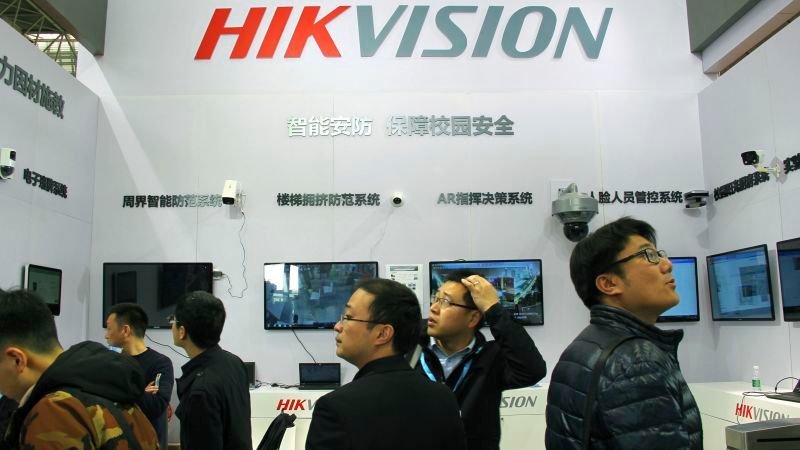
Chinese surveillance giant Hikvision filed a lawsuit against the US Federal Communications Commission (FCC) challenging a ban labeling its equipment a national security threat. The company argues the decision lacks evidence and violates due process, seeking to overturn restrictions blocking federal sales and subsidies. This marks a rare legal pushback from a Chinese firm amid escalating US-China tech tensions. The FCC’s November ruling under the Secure and Trusted Communications Networks Act cited risks of espionage via Hikvision’s cameras, which hold significant US market share in government and critical infrastructure. Hikvision counters that no breaches have been documented, attributing bans to protectionism favoring American rivals like Motorola Solutions. The suit demands reinstatement of $500 million in contracts and challenges the FCC’s authority to designate without trial. Background traces to 2019 blacklisting under Trump-era policies, expanded by Biden and now President Trump’s administration emphasizing supply chain security. Hikvision, 40% state-owned, supplies 30% of global video surveillance but faces global scrutiny, including UK and Australian bans. Legal experts predict prolonged litigation, potentially reaching the Supreme Court. The case underscores bifurcating global tech ecosystems, with US firms like NVIDIA pivoting to domestic chips. Victory for Hikvision could embolden Huawei’s appeals, but analysts foresee rejection amid bipartisan consensus on China risks. Resolution may reshape $100 billion US security tech procurement.

SAP CEO Warns Europe on AI Regulation Risks Falling Behind US and China
Global

SAP CEO Warns Europe on AI Regulation Risks Falling Behind US and China

SAP CEO Christian Klein cautioned European governments against overly stringent AI regulations that could hinder the continent’s competitiveness against the US and China. Speaking at a recent industry forum, Klein emphasized that while ethical safeguards are essential, excessive bureaucracy stifles innovation in critical technologies like generative AI. Europe’s tech sector, already trailing in scalability, faces further risks if policymakers prioritize caution over agility. Klein’s remarks come amid growing concerns over the EU AI Act, which imposes tiered risk classifications on AI systems, mandating transparency and audits for high-risk applications. Proponents argue it sets a global standard for trustworthy AI, but critics, including Klein, warn it burdens startups with compliance costs exceeding those in less regulated markets. SAP, Europe’s largest software firm by market cap, has invested heavily in AI integrations for enterprise resource planning, positioning itself to benefit from balanced policies. The warning resonates as OECD data reveals Europe lagging in AI adoption, particularly among younger demographics. US giants like OpenAI and Chinese firms dominate model training due to fewer hurdles, capturing market share in cloud AI services. Klein urged a “regulate-to-innovate” approach, citing Denmark’s flexible framework as a model. Failure to adapt could exacerbate Europe’s brain drain, with talent migrating to Silicon Valley hubs. Analysis suggests Klein’s plea aligns with broader industry lobbying, including from ASML and Siemens executives. Recent EU funding rounds, like the €5.2 billion Innovation Fund for clean tech, show promise but must extend to digital realms. If unheeded, Europe risks becoming a regulator rather than a leader, ceding economic ground in a projected $15 trillion AI economy by 2030.

From South Africa to Kenya: African Regulators Tighten FX and CFD Rules to Protect Retail Investors and Align with FATF Standards
Global

From South Africa to Kenya: African Regulators Tighten FX and CFD Rules to Protect Retail Investors and Align with FATF Standards

African regulators intensified forex and CFD oversight in 2025, targeting scams and aligning with FATF anti-money laundering standards from South Africa to Kenya. South Africa’s FSCA imposed stricter licensing, real-time reporting, client fund segregation, and enhanced KYC/AML, with 2024/25 enforcement debarring 131 individuals and withdrawing 382 licenses. Kenya’s CMA and Nigeria’s SEC banned unregulated brokers, launched education campaigns, and mandated AML checks, while the new Virtual Asset Service Providers Act requires VASPs’ digital compliance. Ghana’s push for retail forex licensing formalizes margin trading amid rising scams. These measures raise barriers for non-compliant brokerages but foster market maturity, attracting authorized players like EBC Financial Group. FSCA’s 2025-2028 strategy prioritizes conduct oversight for online platforms, with ongoing audits and penalties deterring misuse of client funds. Social media fraud warnings highlight impersonator brokers targeting retail traders, prompting public alerts. Forex leverage caps and transparency rules mirror EU MiFID III trends, impacting cross-border operations. Brokerage firms face higher capital needs but benefit from investor trust, boosting volumes in regulated pairs like USD/ZAR. Regional ties to Europe and U.S. amplify scrutiny: SARB’s exchange guidelines guide corporate flows. Latin America’s trade resilience offers forex opportunities, as African exports stabilize currencies. U.S. tariffs indirectly support commodity prices, aiding African FX. Alignment with global standards positions Africa for institutional inflows, though short-term disruptions hit unlicensed players. Retail protection trumps volume, ensuring sustainable growth amid Trump’s dollar-strong policies.

December Tailwinds: European Indices Extend Traditional ‘Santa Rally’ Amid Easing Inflation and Rate-Cut Hopes
Global

December Tailwinds: European Indices Extend Traditional ‘Santa Rally’ Amid Easing Inflation and Rate-Cut Hopes

December’s “Santa Claus rally” gained momentum in 2025, with European markets posting consistent gains rooted in decades of seasonal patterns and institutional buying. The EURO STOXX 50 has averaged 1.87% December returns since 1987, positive 71% of the time—second only to November—while the DAX shows 2.18% averages with 73% win rates. Late-month surges dominate: from December 15 to year-end, EURO STOXX delivers 2.12% on average (76% positive), fueled by fund managers’ year-end rebalancing. Easing eurozone inflation and ECB rate-cut bets extend this tailwind, contrasting early-year sideways trading. Fund manager behavior drives much of the phenomenon, as “price maintenance” prompts buying of strong performers to enhance client reports. Seasonax analyst Christoph Geyer notes this intensifies in range-bound years like 2025’s DAX since May, with mid-November to early-January patterns favoring 6%+ gains in 34 of 46 years. U.S. parallels reinforce credibility: S&P 500 December gains occur 74% of the time at 1.44% average. Country indices align—CAC 40 at 1.57% (70% positive), IBEX 35 at 1.12%—building late-December steam. Brokerage trading volumes spiked in derivatives tied to these indices, with forex pairs like EUR/USD reflecting rate divergence hopes. European stocks’ undervaluation, per Yahoo Finance, supports earnings-driven upside at 21.4% growth. Global spillovers include U.S. Wall Street’s sideways churn ahead of Fed decisions, impacting cross-Atlantic flows. African and Latin brokerage sectors watch closely, as euro strength aids commodity-linked currencies. While past performance offers no guarantees, 2025’s setup—easing inflation, technical breakouts, and positioning—mirrors historical catalysts. Risks like U.S. tariffs under Trump could cap gains via dollar appreciation, but seasonal forces prevail. Investors eye U.S. inflation for confirmation, blending festive stats with macroeconomic reality.

Christian Fischer
CEO, Bosch

Scroll to Top