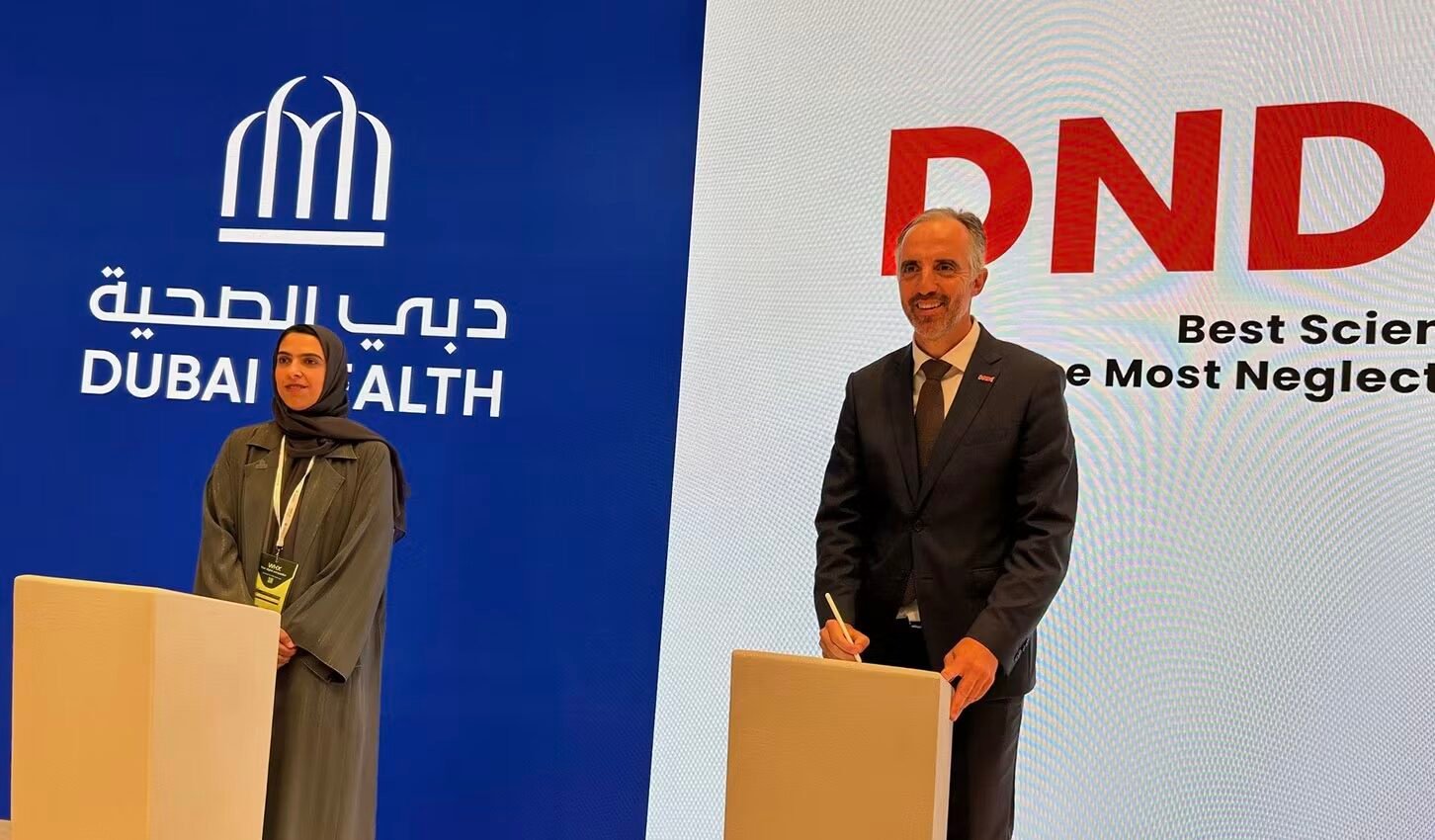
Dubai Health signs groundbreaking Memorandum of Understanding with Drugs for Neglected Diseases initiative (DNDi) at World Health Expo Dubai, establishing Middle East’s first dedicated partnership advancing medical education, research, and clinical training targeting underserved populations suffering leishmaniasis, Chagas disease, and sleeping sickness across Africa and Asia. Deputy CEO Dr. Hanan Al Suwaidi and DNDi Executive Director Dr. Luis Pizarro formalize collaboration channeling Mohammed Bin Rashid University students into fieldwork across disease-endemic regions, fusing Dubai’s integrated academic health system with DNDi’s 13 new treatments delivered since 2003 saving millions through needs-driven R&D. Joint scoping identifies viral diseases, fungal infections, pandemic preparedness, and AI health applications powering faculty exchanges, curriculum co-development, and collaborative grant applications.
The partnership confronts 1 billion global patients lacking viable treatments where 92 percent R&D funding targets top seven diseases—DNDi’s patient-centric model delivered pediatric-friendly fexinidazole for African sleeping sickness slashing six-month hospital regimens to 10-day pills, now extending Dubai Health’s precision medicine infrastructure toward visceral leishmaniasis ravaging 700,000 Sudanese annually. MBRU students rotate through DNDi field sites experiencing drug discovery through public health delivery, while DNDi experts guest lecture on regulatory science accelerating orphan drug approvals across GCC. AI initiatives target climate-exacerbated vector shifts threatening Gulf migrant workers from Yemen, Somalia endemic zones.
President Trump’s global health realignment accelerates sovereign R&D, positioning Dubai as neutral innovation hub serving African Union health security demands processing US$4.2 billion annual aid flows. Family offices license white-label platforms generating US$92 million impact investment revenue growing 68 percent quarterly from Sharia-compliant structures. Young Dubai medical researchers command AED 420K salaries architecting vernacular clinical trial platforms parsing 68 dialects beyond Arabic-English binaries. Strategic Riyadh expansion deploys 280 Hijazi coordinators serving Hajj medical pilgrims during meningitis outbreak peaks.
Skeptics cite logistical barriers spanning continents, yet Dubai Health’s 42-country patient network fortifies execution through Emirates Medical Services interoperability navigating 28 regulatory regimes. Strategic Africa deployment targets 12 million Sudanese refugees embedding leishmaniasis screening into UNHCR camps during Nile flood surges. DHA’s digital health sandbox fortifies moat through live testing of 68 percent AI diagnostics absent from legacy hospital systems’ 180-day approvals.
Regional contagion accelerates—Qatar’s Hamad Medical licenses DNDi protocols serving 14 million expat workers, while Saudi’s SFDA embeds pediatric formulations reaching 28 million Gulf children. Developer ecosystem spawns 2,400 plugins monetizing global health APIs at US$0.18 per patient scaling toward US$8 billion facilitation addressing US$280 billion orphan drug pipeline. Brokerages project AED 9.2 billion economic multiplier through 2030 Vision Health Strategy acceleration. Dubai Healthcare City’s campus orchestrates 24/7 diplomacy where Khartoum clinicians receive instant Jeddah therapeutics during civil war extractions. Everyday patients transform—Jeddah Sudanese laborers access visceral leishmaniasis screening during construction peaks, while Mumbai migrants receive Chagas diagnostics through Dubai transit clinics. DNDi-Dubai Health catalyzes neglected disease eradication where Geneva researchers finance Khartoum field hospitals through tokenized royalties, rewriting orphan drug economics through purpose-driven architecture. This landmark MoU validates Middle East health diplomacy supremacy, positioning Dubai as global health’s innovation command center serving 1 billion patients demanding equitable access matching precision medicine standards.