
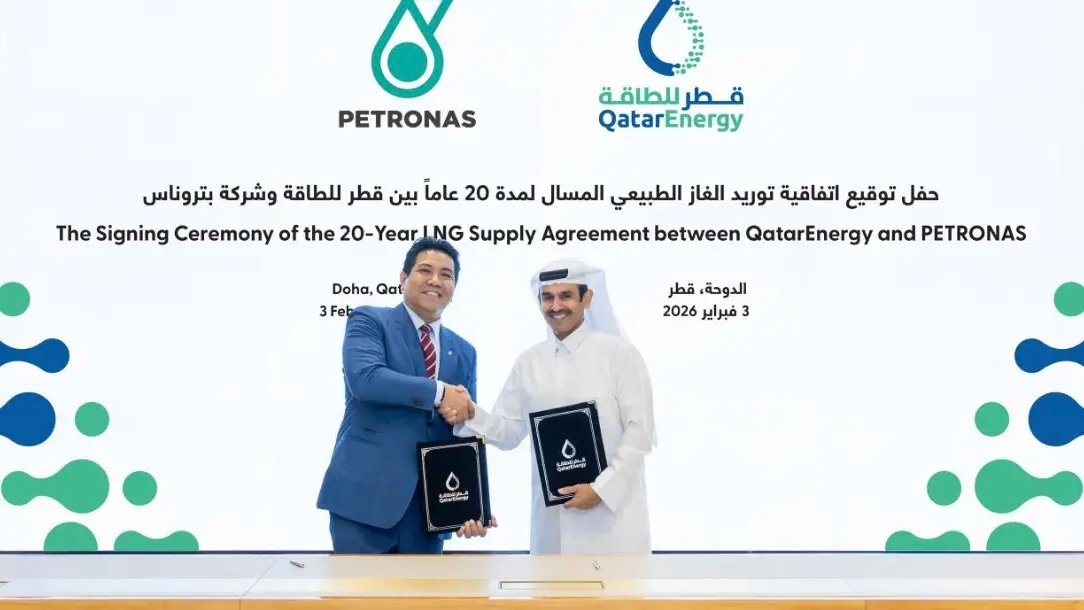
Petroliam Nasional Berhad (Petronas) has signed a landmark 20‑year sale and purchase agreement with QatarEnergy for 2 million tonnes per annum of LNG, securing long‑term supply as the Strait of Hormuz blockade disrupts global cargoes. Deliveries begin 2028, destined for Petronas’ Bintulu terminal in Sarawak. Deal value exceeds US$40 billion over contract life.
The SPA arrives at critical moment. Iran’s naval action halted 20 per cent global LNG transit. Spot prices doubled to US$25/MMBtu. Petronas holds 25 per cent Asia LNG spot share but faces portfolio risks. QatarEnergy’s 126 Mtpa capacity provides unmatched reliability.
Petronas diversifies aggressively. Existing contracts with US Gulf Coast, Australia and Russia cover 70 per cent needs. Qatar deal hedges against US sanction risks and Australian field declines. Bintulu expansion adds 5 Mtpa regasification by 2030.
Malaysia’s energy mix demands security. Gas powers 40 per cent electricity and 30 per cent industry. Domestic fields decline 8 per cent annually. LNG imports must rise 50 per cent by 2030. Government mandates 20 per cent renewables by 2025 but gas remains baseload.
Strategic implications extend regionally. Petronas emerges leading ASEAN LNG trader, supplying Philippines, Thailand, Vietnam. QatarEnergy gains foothold in world’s fourth‑largest economy. Deal includes carbon credits and joint low‑carbon LNG studies.
Financial terms undisclosed but benchmarked to JKM. Petronas exercises destination flexibility, redirecting cargoes as needed. QatarEnergy commits latest Q-Flex carriers for efficiency.
Challenges persist. Hormuz insurance premiums triple. Sarawak communities protest terminal expansion. Monsoon delays impact Q4 deliveries. Petronas invests RM2 billion in pipeline upgrades.
Analysts applaud diversification. RHB Research raises target price 15 per cent. Maybank forecasts 10 per cent EBITDA growth. Deal de‑risks 30 per cent portfolio exposure.
Regional domino effects emerge. Thailand accelerates third terminal. Indonesia raises domestic market obligation to 25 per cent. Philippines charters FSRUs as Malampaya fades.
Petronas leverages trader status. Spot arbitrage yields US$500 million annually. Regasification assets generate stable fees. Qatar partnership opens low‑carbon ammonia opportunities. The SPA exemplifies LNG’s evolution from commodity to strategic asset. As Hormuz volatility persists, long‑term contracts regain primacy. Petronas secures Malaysia’s energy future while QatarEnergy cements Asia market share.