
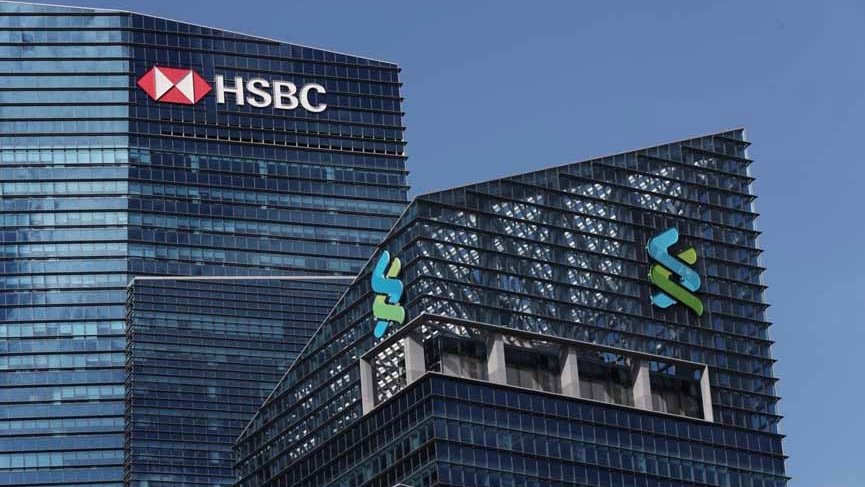
Citigroup and Standard Chartered have evacuated staff from offices in Dubai and told employees to work from home after Iran threatened to target banking interests linked to the US and Israel across the region. HSBC separately closed branches in Qatar on a precautionary basis, underscoring how quickly the conflict has moved from rhetoric to operational disruption for global lenders with Gulf footprints.
The moves are significant because they involve some of the largest and most systemically important international banks in the region. Citi told staff in the Dubai International Financial Centre and Oud Metha areas to leave offices until further notice, while Standard Chartered activated telecommuting arrangements as part of its business continuity plan. HSBC’s temporary branch closures in Qatar reflect the same priority: keep employees safe, maintain essential services, and preserve the integrity of payment and treasury operations even if normal office routines are suspended.
These contingency steps are not just symbolic. Gulf financial hubs rely on dense office ecosystems where bankers, lawyers, compliance teams and clients move constantly between branches, towers and free zones. When that ecosystem shifts to remote mode, even briefly, deal execution slows, client onboarding can be delayed and trade finance processing becomes more cumbersome. For multinational banks, the challenge is to reassure customers that liquidity, settlement and risk management continue even when the front office is dispersed.
The timing is especially sensitive because the UAE central bank has just spent days arguing that the sector remains stable and fully operational. That reassurance is backed by strong numbers: a 17 per cent capital adequacy ratio, liquidity coverage above 146.6 per cent and total banking assets above AED 5.42 trillion. In other words, the balance sheets are strong even as the operational environment becomes more fragile.
There is also a strategic lesson for the global banking industry. Offices in Dubai and Doha are no longer viewed simply as sales outposts; they are critical nodes in global capital flows, energy finance, sovereign wealth relationships and regional treasury management. If those nodes have to be moved to remote mode, it demonstrates how quickly a political shock can hit the practical machinery of banking without causing a classic credit crisis.
For the moment, lenders are choosing caution, not retreat. But with staff evacuations, branch closures and emergency protocols now in play, the Gulf’s banking sector has entered a phase where security and continuity planning may matter as much as growth.