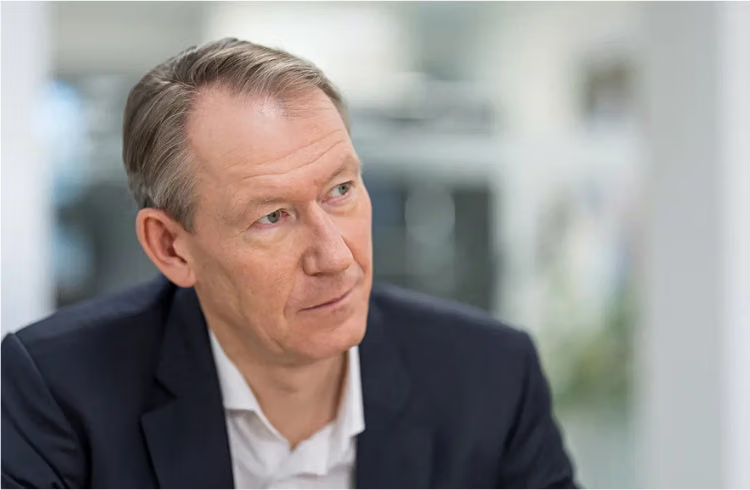

Bank Albilad has appointed Bashaar Yahya Al Qunaibit as its new chief executive officer, completing a leadership transition that was approved by the board and cleared by the Saudi Central Bank. The move took effect on June 1, 2026, after outgoing CEO Abdulaziz Mohammed AlOnaizan stepped down from the role and moved into a non-executive position. It is a significant change at one of Saudi Arabia’s better-known lenders, and it signals continuity rather than disruption at the top.
The appointment was first announced in late April, making it a recent and verifiable leadership move rather than a routine internal reshuffle. Al Qunaibit previously served as senior executive vice president for business at the bank and brings more than 25 years of experience in banking and financial services. That background suggests the board wanted a leader with operational knowledge and a deep understanding of the bank’s customer and business franchise.
Leadership changes at major banks often matter as much for what they preserve as for what they change. In this case, the succession appears designed to keep the bank on a stable path while allowing the outgoing chief executive to stay involved at a higher governance level. AlOnaizan’s move to chairman gives the institution continuity at board level, which can be helpful during a period of ongoing competition in the Saudi banking sector.
The timing is also important because Saudi banks are operating in a market where growth opportunities remain strong but execution matters more than ever. Lenders are balancing corporate lending, consumer demand, digital transformation and regulatory expectations at the same time. In that environment, boards often prefer leaders with proven internal experience rather than outside hires who may need time to adapt.
Bank Albilad’s succession also fits a broader pattern across the Middle East, where many large companies are refreshing leadership while keeping transitions orderly. The region’s financial institutions in particular are paying close attention to governance, regulatory alignment and succession planning. That makes this appointment relevant beyond one bank, because it reflects how Saudi lenders are managing leadership in a more mature and competitive market.
For investors and clients, the key issue now is how quickly the new CEO settles into the role and whether the bank continues to build on its existing strategy. Because Al Qunaibit has been part of the institution’s senior management, the transition should be relatively smooth. That reduces the risk of strategic drift and suggests the bank is aiming for steady execution rather than a sharp pivot. In practical terms, the appointment confirms that Bank Albilad is prioritizing stability, continuity and internal capability at the top of the organization. Those are often the qualities shareholders want to see when a lender changes leadership.