
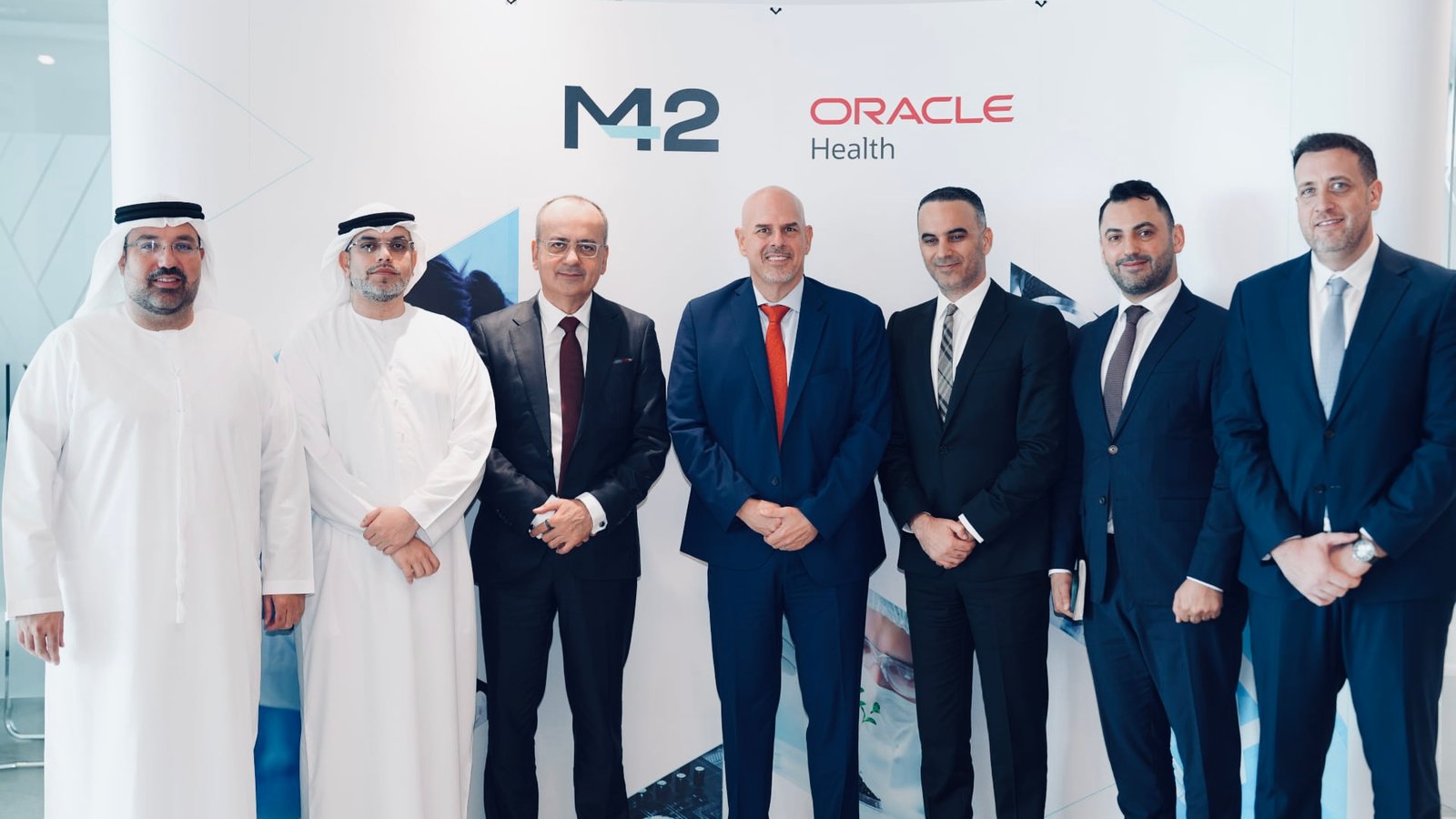
M42 plans to adopt Oracle Health Data Intelligence to connect clinical, genomic and real-world information across its healthcare network, marking a new step in the UAE’s push toward data-driven medicine. The partnership is designed to support chronic disease management, population health programmes and more personalised treatment decisions.
The initiative will integrate Oracle Health Data Intelligence with Oracle Health Foundation electronic health records. M42 said the combined system should create a secure and scalable healthcare environment where clinicians and researchers can generate insights more quickly, coordinate treatment more effectively and improve patient experiences.
The announcement is important because healthcare systems increasingly generate information from different sources. A patient’s hospital record may sit separately from laboratory results, genetic information, pharmacy data and long-term monitoring. Bringing those sources together can provide doctors with a more complete view of a patient’s condition and treatment history.
M42 said the new platform will initially support its diabetes programmes. That focus reflects the burden of chronic diseases and the need for early intervention. Diabetes care often requires regular monitoring, medication adjustment, lifestyle support and long-term coordination between patients and healthcare professionals.
By connecting relevant data, the system is intended to help providers identify risks earlier and engage patients more proactively. Instead of waiting for a condition to worsen before responding, clinicians may be able to use data to identify warning signs, target follow-up care and improve treatment adherence.
The technology programme builds on an existing strategic collaboration between M42 and Oracle Health. The companies began working together last year to create unified longitudinal patient records that can be accessed across the UAE healthcare ecosystem.
A longitudinal record follows a patient over time rather than capturing information only during individual visits. That approach can help clinicians understand how a condition has changed, which treatments have been tried and whether interventions have produced the desired results.
M42 has also integrated data from the Emirati Genome Program into the electronic health record system. This makes pharmacogenomic information available to clinicians, supporting treatment decisions that take account of how a patient’s genetic profile may influence responses to medicines.
The use of genomic data adds a further dimension to precision healthcare. Traditional treatment plans often rely on broad clinical guidelines, while precision medicine seeks to tailor decisions more closely to the individual. Genetic information does not replace clinical judgement, but it can provide additional evidence when doctors assess treatment options.
For the UAE, the project supports a national ambition to become a leader in advanced healthcare, artificial intelligence and genomics. The country has invested heavily in digital infrastructure and research capacity, and the M42-Oracle collaboration links those priorities to day-to-day clinical care.
The programme also shows how technology companies are becoming more deeply involved in healthcare delivery. Oracle brings data-management and electronic-record capabilities, while M42 contributes a network built around healthcare services, technology and genomics. Their cooperation demonstrates how healthcare transformation increasingly depends on partnerships rather than isolated systems.
Data integration could also improve coordination between different parts of the health system. When authorised professionals can access relevant information more easily, patients may face fewer repeated tests, less paperwork and fewer delays when moving between primary care, specialist services and hospitals.
The practical value will depend on implementation. Healthcare data is highly sensitive, and any large-scale system must protect patient privacy, maintain strong security and control who can access specific information. M42 said the planned ecosystem would be secure and scalable, but the success of the programme will depend on how those safeguards operate in practice.
Interoperability will be another important challenge. Different hospitals, clinics and laboratories may use separate systems, formats or workflows. A unified platform must connect those systems without disrupting clinical operations or creating additional administrative burdens for medical staff.
The initial diabetes deployment could provide a useful test case. It is a condition that produces large volumes of clinical information and requires continuing engagement. If the programme improves monitoring and care coordination, M42 could extend the model to other chronic diseases and population-health initiatives.
The partnership also has implications for research. A secure, connected dataset can help researchers identify trends, evaluate treatments and understand how diseases develop across different patient groups. Better access to structured information can shorten the time between data collection and useful clinical insight.
However, data alone does not guarantee better care. Healthcare professionals must be able to interpret the information, trust the recommendations and incorporate them into busy clinical workflows. Patients must also understand how their data is used and how digital tools support, rather than replace, the relationship with their doctors.
The project’s wider significance lies in its attempt to link technology with measurable health outcomes. M42 is not presenting the platform only as an information system; it is positioning it as a tool for prevention, early intervention and more efficient care delivery.
As the UAE healthcare sector becomes more connected, companies that can combine clinical services, genomics and artificial intelligence may gain a stronger strategic position. M42’s latest announcement places it at the centre of that transformation.
The first deployment in diabetes programmes will be watched closely. Its results could determine how quickly the platform expands, how clinicians use its insights and whether the UAE can translate advanced data infrastructure into better outcomes at population scale. For now, M42 and Oracle Health are building the foundations of a more connected healthcare system, one where patient records, genomic information and real-world evidence can work together to support more timely and personalised decisions.
