
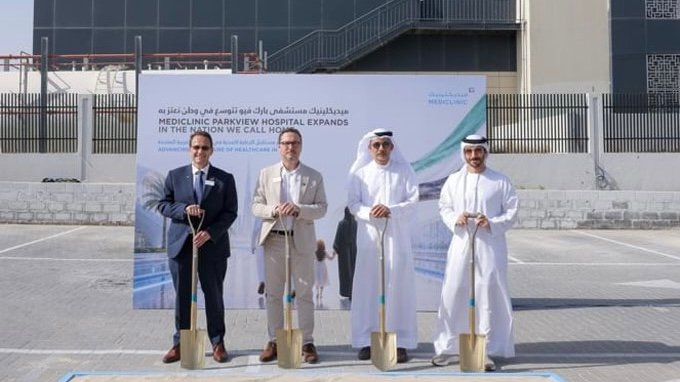
Mediclinic Middle East will invest AED420 million, or approximately $114 million, to expand Mediclinic Parkview Hospital in Dubai. The project will strengthen specialist healthcare services and broaden access for residential communities across the southern part of the emirate.
Construction is expected to begin shortly, with completion scheduled during 2027. The investment will expand clinical capacity across oncology, paediatrics, musculoskeletal care, sports medicine, physiotherapy and rehabilitation. It will also add day-surgery theatres and day-care suites.
The project reflects the changing needs of Dubai’s growing residential districts. As new communities develop farther from the traditional city centre, residents increasingly require specialist medical services closer to where they live. Expanding Parkview allows Mediclinic to respond to that demand without requiring every patient to travel to central facilities.
One of the most important elements will be the development of oncology services. The expanded facilities are expected to support current and future cancer-care requirements, giving the hospital greater capacity to manage diagnosis, treatment and follow-up services.
Cancer care often involves several stages and medical disciplines. Patients may require imaging, surgery, medication, radiation, specialist consultations and rehabilitation. Expanding oncology capacity within one hospital can improve coordination and reduce the need for patients to move between different facilities.
Paediatric care is another central component of the project. Mediclinic plans to create a dedicated paediatric urgent-care unit for infants and children, bringing specialised treatment closer to families in southern Dubai.
Urgent care designed specifically for children can provide an alternative to general emergency services when patients need rapid attention but do not require the full resources of a major emergency department. It can also give parents greater confidence that staff and facilities are prepared for younger patients.
The project will expand musculoskeletal, sports medicine and physiotherapy services as well. Those services reflect rising demand from active populations, workplace injuries, mobility problems and patients recovering after surgery or trauma. A stronger rehabilitation offering can also help shorten recovery periods and support patients after hospital discharge.
New day-surgery theatres and day-care suites will form another part of the development. Day surgery allows patients to receive selected procedures and return home without an overnight stay, provided their condition and recovery needs permit it.
The model can improve patient convenience and help hospitals use beds more efficiently. It requires carefully designed facilities, reliable scheduling, strong infection control and effective follow-up arrangements, but it can reduce pressure on inpatient capacity for suitable procedures.
Mediclinic also plans to upgrade the hospital’s digital and operational capabilities. Automation and smart technologies will be deployed to support service integration, patient experience, clinical safety and operational efficiency.
Digital tools can help coordinate appointments, manage patient movement, support records and reduce manual processes. They may also provide hospital teams with better visibility over capacity, waiting times and the progress of clinical work. However, technology must be integrated carefully so it supports clinicians rather than creating additional complexity.
The investment comes as Dubai continues to expand its healthcare infrastructure alongside population and economic growth. New residential developments, business districts and tourism activity are increasing demand for hospitals, clinics, pharmacies and specialist services.
Private providers have an important role in meeting that demand. They can add capacity, introduce specialist services and invest in technology while operating within the emirate’s regulatory framework. The expansion of Parkview illustrates how private healthcare companies are planning for long-term demand rather than only responding to immediate pressure.
For Mediclinic Middle East, the project also strengthens the position of Parkview Hospital within the company’s network. A broader specialist offering can help the hospital attract referrals, support more complex cases and improve continuity between outpatient, surgical and rehabilitation services.
The investment may benefit patients across several stages of care. A child could use the paediatric urgent-care service, an adult could receive oncology treatment, and another patient could access physiotherapy or sports medicine in the same broader hospital system. That range can make the facility more useful to surrounding communities.
The expansion will nevertheless require careful execution. Healthcare construction is more complex than ordinary commercial development because work must often continue around active clinical operations. Construction teams must protect patients, maintain safety and coordinate building activity with hospital schedules.
The project’s 2027 completion target creates a clear timetable, but final delivery will depend on approvals, procurement, equipment installation and staff preparation. Medical facilities cannot begin operating simply when construction finishes; departments also need trained teams, testing, licensing and operational integration.
Recruitment will therefore be important. New oncology, paediatric, rehabilitation and day-surgery capacity requires specialists, nurses, technicians, therapists and administrative staff. The investment in physical facilities will need to be matched by investment in people.
The project also shows how hospital expansion is becoming more focused. Rather than adding only general beds, providers are investing in specialised pathways, digital systems and outpatient models. That approach reflects a healthcare market seeking better outcomes, greater convenience and more efficient use of resources.
For Dubai residents, the practical benefit will be wider access to advanced services closer to home. For Mediclinic, the expansion creates a larger platform for growth in one of the emirate’s most rapidly developing residential areas.
AED420 million is a substantial commitment, but the project is designed to support demand over many years. Its success will ultimately be measured by whether it improves access, strengthens clinical services and delivers a better experience for patients and families. Mediclinic Parkview’s expansion is therefore more than a hospital construction project. It is part of Dubai’s broader move toward distributed, specialist and technology-enabled healthcare, with private providers investing in facilities that match the emirate’s changing population and urban geography.
