
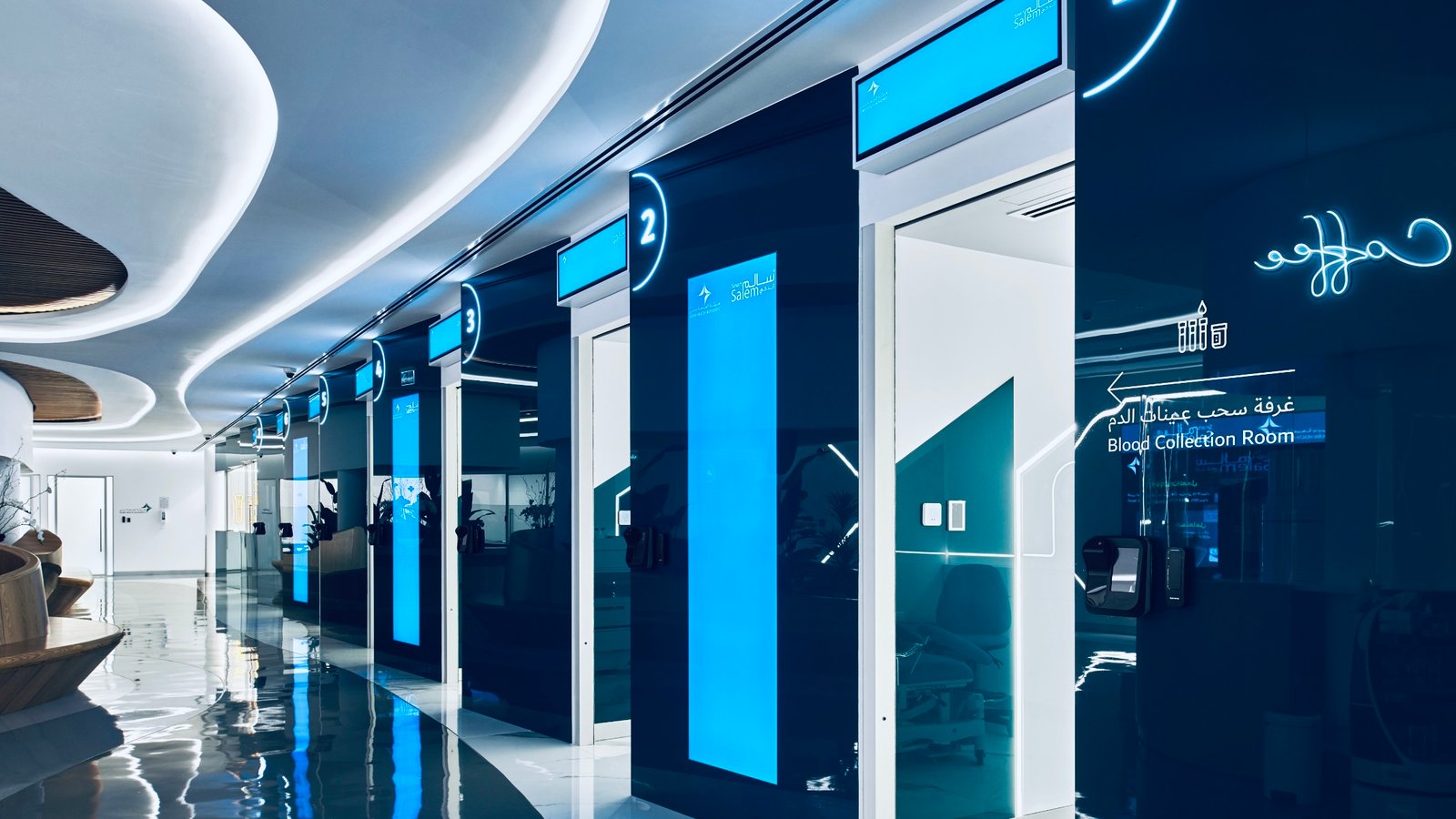
Klea Holding is moving closer to opening its first digital medical centre in Riyadh through its subsidiary Smart Health. Construction and site-development work have been completed, while the company awaits final approvals from local authorities and the Civil Protection Authority.
The centre is expected to operate under the Smart Santé name and could open within weeks once the remaining approvals are secured. Klea has not announced a specific launch date, but the completion of construction marks an important milestone for its planned entry into Saudi Arabia’s healthcare market.
The project is designed around a digital medical-care model. Although the company has not disclosed every operational detail, the concept points toward healthcare delivery that uses technology to connect patients with medical services, consultations and supporting processes.
Digital medical centres have become more relevant as healthcare providers seek to improve access, reduce pressure on hospitals and offer patients more convenient ways to receive care. They can combine physical clinical spaces with digital tools, allowing patients to manage appointments, consultations, records and follow-up more efficiently.
For Riyadh, the model fits a healthcare market that is expanding alongside population growth, urban development and economic transformation. The capital is home to a large and diverse population, creating demand for accessible primary care, specialist referrals and digitally enabled services.
Klea’s entry also reflects growing international interest in Saudi Arabia’s healthcare sector. The company has said its strategy is to benefit from the kingdom’s economic growth and create value through Middle East operations. The Riyadh centre provides a first platform for testing that strategy in the local market.
The remaining approvals are significant. Healthcare facilities must meet requirements related to safety, clinical operations, building standards and emergency preparedness. Civil Protection approval is particularly important because it confirms that the site is prepared to protect patients, staff and visitors in the event of an emergency.
Regulatory approval also provides confidence that the centre can operate within Saudi Arabia’s healthcare framework. For a foreign or newly established operator, compliance is essential to building trust with patients, insurers, medical professionals and potential partners.
The company has funded construction and site development internally. That reduces dependence on external project financing during the initial launch phase and suggests Klea has committed its own resources to establishing the Saudi operation.
The next challenge will be turning a completed site into a functioning healthcare business. This will require medical staff, administrative teams, technology systems, patient-registration processes and partnerships with laboratories, pharmacies or referral hospitals where necessary.
Digital healthcare depends on more than an online interface. Patients must be able to receive reliable clinical advice, access appropriate diagnostic services and obtain follow-up care when required. A successful centre must connect digital convenience with safe and effective medical pathways.
The Riyadh project will therefore test Klea’s ability to combine technology with clinical delivery. If the centre opens successfully and attracts patients, it could provide a foundation for future expansion across Saudi Arabia or other Middle Eastern markets.
The use of the Smart Santé name suggests that Klea is also drawing on French healthcare expertise and branding. The company aims to position the centre as a modern digital medical facility while adapting its services to Saudi regulatory and patient requirements.
That balance will be important. International healthcare brands can bring technology, processes and clinical experience, but they must still understand local expectations. Saudi patients may value digital access, but they will also expect high-quality doctors, clear communication, language accessibility and reliable physical care when needed.
The project comes as Saudi Arabia’s private healthcare sector enters a new phase of expansion. Providers are investing in capacity, specialised services and technology as the country seeks to modernise healthcare delivery and increase private-sector participation.
Digital centres may help support that transition by handling consultations and routine care outside large hospitals. If used effectively, they can help reserve hospital resources for more complex cases while giving patients faster access to basic and follow-up services.
However, digital healthcare also presents challenges. Providers must protect personal medical information, ensure stable connectivity and maintain strong clinical governance. They must also decide when a patient needs an in-person assessment rather than a remote interaction.
The final approvals process will determine how quickly Smart Health can begin operations. Klea has said the centre is close to launch, but the company remains dependent on the timetable set by relevant authorities. That means the opening should be treated as imminent rather than guaranteed on a fixed date.
Once operational, the centre will give Klea a direct opportunity to understand patient behaviour in Riyadh. The company can assess which services attract demand, how customers use digital tools and what adjustments are needed before further expansion.
The first site may also become a demonstration platform for investors and partners. A functioning digital medical centre would allow Klea to show how its model works in practice rather than relying only on plans or projections.
For Saudi Arabia, the project adds another private-sector participant to the country’s expanding healthcare ecosystem. For Klea Holding, it represents a strategic entry into a large and rapidly developing market. For patients, its value will depend on whether the centre delivers convenient, affordable and clinically sound care.
The immediate milestone is now clear: secure the final approvals and open the doors. After that, Smart Health will need to prove that digital care can become a trusted part of everyday healthcare in Riyadh.
