
Elon Musk’s The Boring Company has raised $3 billion in a Series D funding round led by the United Arab Emirates and affiliated investment entities. The financing values the tunnelling startup at $23 billion and links its next stage of growth directly to an ambitious underground infrastructure programme across the UAE.
The company said the partnership could eventually involve more than 150 kilometres of tunnels in the UAE, including the previously announced Dubai Loop project. The new funding will support engineering, production and operations hiring, as well as the development of tunnel-boring technology and projects in the United States and the Middle East.
The investment represents a major increase in The Boring Company’s valuation. The startup was valued at $5.7 billion after a $675 million funding round in 2022. Its new valuation shows how investor interest has grown around automated tunnelling, high-capacity urban transport and large infrastructure projects.
The UAE-led round also demonstrates the country’s willingness to back technology companies that could support its long-term urban development goals. The Emirates has invested heavily in transport, smart cities, artificial intelligence and advanced infrastructure, and The Boring Company’s tunnel technology fits within that broader strategy.
The Dubai Loop is the most visible part of the relationship. Construction is expected to begin later in 2026 on a 6.4-kilometre tunnel with four stations. The pilot project is intended to show how underground passenger transport could move people through busy parts of Dubai while avoiding surface congestion.
The proposed 150-kilometre network would be far larger than the pilot. It would require extensive planning, construction and coordination with existing transport systems. The company would need to assess demand, select routes, obtain approvals and build stations that connect effectively with roads, metro lines and other forms of public transport.
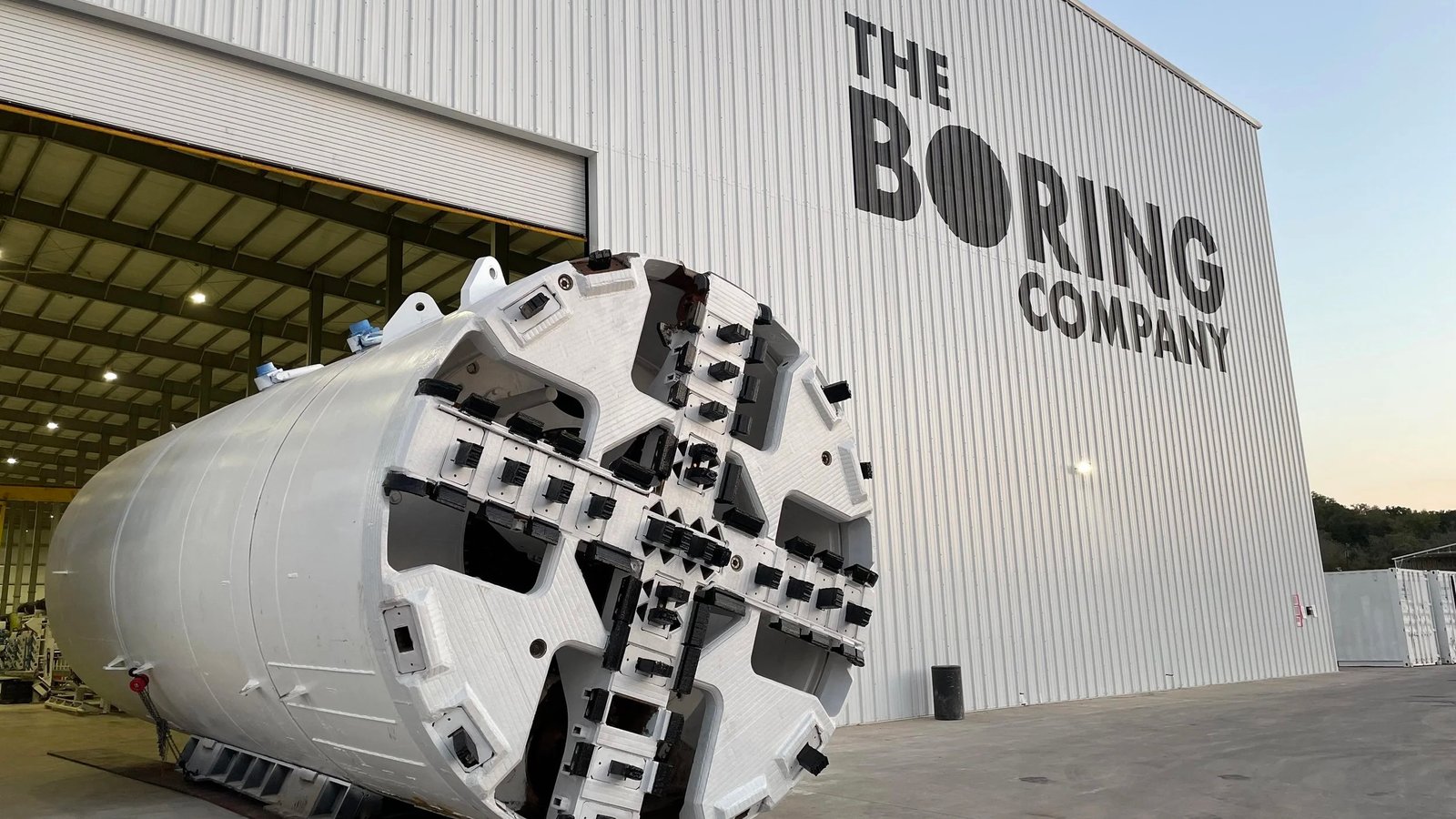
The Boring Company’s business model is based on building smaller tunnels than traditional subway systems. The company argues that narrower tunnels can reduce construction costs and speed up delivery. It uses specialised tunnel-boring machines, including its Prufrock system, to develop underground routes.
The funding will help the company expand that technology. The Boring Company said the round would support new engineering and production workers, the development of additional boring machines and operations connected to projects in Dubai, Las Vegas and Nashville.
The investor group includes major venture capital and private investment firms. Sequoia Capital, Andreessen Horowitz, Temasek, Vy Capital, Valor Equity Partners, Human Capital, Shamal Holding and Baron Capital participated alongside the UAE-linked investors.
The presence of international technology investors gives the round additional significance. It shows that the project is not being financed only as a local transport experiment. Investors appear to be supporting the possibility that The Boring Company can become a global infrastructure platform with projects across multiple cities.
The funding also reflects a growing interest in infrastructure technology. Startups have traditionally attracted investment through software, online services and consumer platforms. The Boring Company is different because its growth depends on physical construction, engineering talent, machinery and government partnerships.
That model creates both opportunities and challenges. A successful tunnel project could generate major long-term revenue and demonstrate a new approach to urban mobility. But construction projects face regulatory delays, cost overruns, technical problems and public opposition, all of which can affect timelines and returns.
The company’s track record will therefore be examined closely. Several earlier projects in the United States were proposed but did not reach full development, creating questions about execution and delivery. The UAE programme gives the startup a chance to demonstrate that it can convert large plans into operating infrastructure.
The Dubai project is especially important because it could become a reference point for future customers. If the system delivers fast construction, reliable service and competitive costs, other cities may consider similar partnerships. If it faces delays or fails to attract enough users, the wider expansion plan could become more difficult.
For Dubai, underground transport could address some of the pressures created by population growth and rising traffic. The city continues to expand residential, commercial and tourism districts, increasing demand for efficient movement across major corridors. Additional underground routes could complement existing transport systems.
The project could also support Dubai’s image as a testing ground for new technology. The emirate has attracted major investments in autonomous transport, artificial intelligence, robotics and smart-city services. Hosting one of The Boring Company’s largest international deployments would add another high-profile technology project.
There are practical questions about how the tunnels will operate. The Boring Company’s Loop concept uses electric vehicles to carry passengers through tunnels rather than conventional rail cars. The system must manage vehicle flow, station capacity, emergency access, ventilation, maintenance and passenger safety.
Integration with existing public transport will also be critical. A tunnel network is most useful when stations are located near homes, offices, shopping areas and other transport connections. Poor route selection could limit usage, even if construction is completed successfully.
The partnership may create wider economic benefits. Construction could generate demand for engineering, materials, equipment, project management and local services. It could also support technical training and create new opportunities for companies involved in advanced infrastructure.
The financing gives The Boring Company the resources to grow its workforce and industrial capacity. Building more than 150 kilometres of tunnels would require a much larger organisation than the one needed for individual pilot projects. The company will need to recruit engineers, construction specialists, safety experts and operational managers.
For the UAE, the investment is also a bet on exporting its role as an infrastructure investor. By backing an international startup and hosting its technology, the country can influence the direction of future urban mobility while strengthening its position as a global technology and capital hub.
The $23 billion valuation reflects expectations rather than completed infrastructure. The planned tunnel network has not yet been built, and its commercial success will depend on execution, approvals, passenger demand and operating performance.
The immediate test will be the Dubai Loop. Construction is expected to start later this year, creating the first major opportunity to assess The Boring Company’s technology in the UAE. The pilot’s results could shape the pace of the broader 150-kilometre plan.
The new funding therefore marks a decisive moment for the startup. It gives The Boring Company capital, strategic backing and a major international market, but it also raises expectations. The company must now prove that its tunnel vision can become a practical transport solution at urban scale.
The $1.5 million investment gives Gaia the opportunity to develop those capabilities while working closely with Saudi organisations. If the platform succeeds, it could become part of the country’s emerging sovereign-AI infrastructure and support businesses across several sectors. For now, Gaia remains an early-stage company with a clear market thesis: Saudi enterprises want the benefits of AI, but they also want control over their data. Its next challenge is proving that security, local relevance and automation can be delivered together in a product that companies will use every day.
