
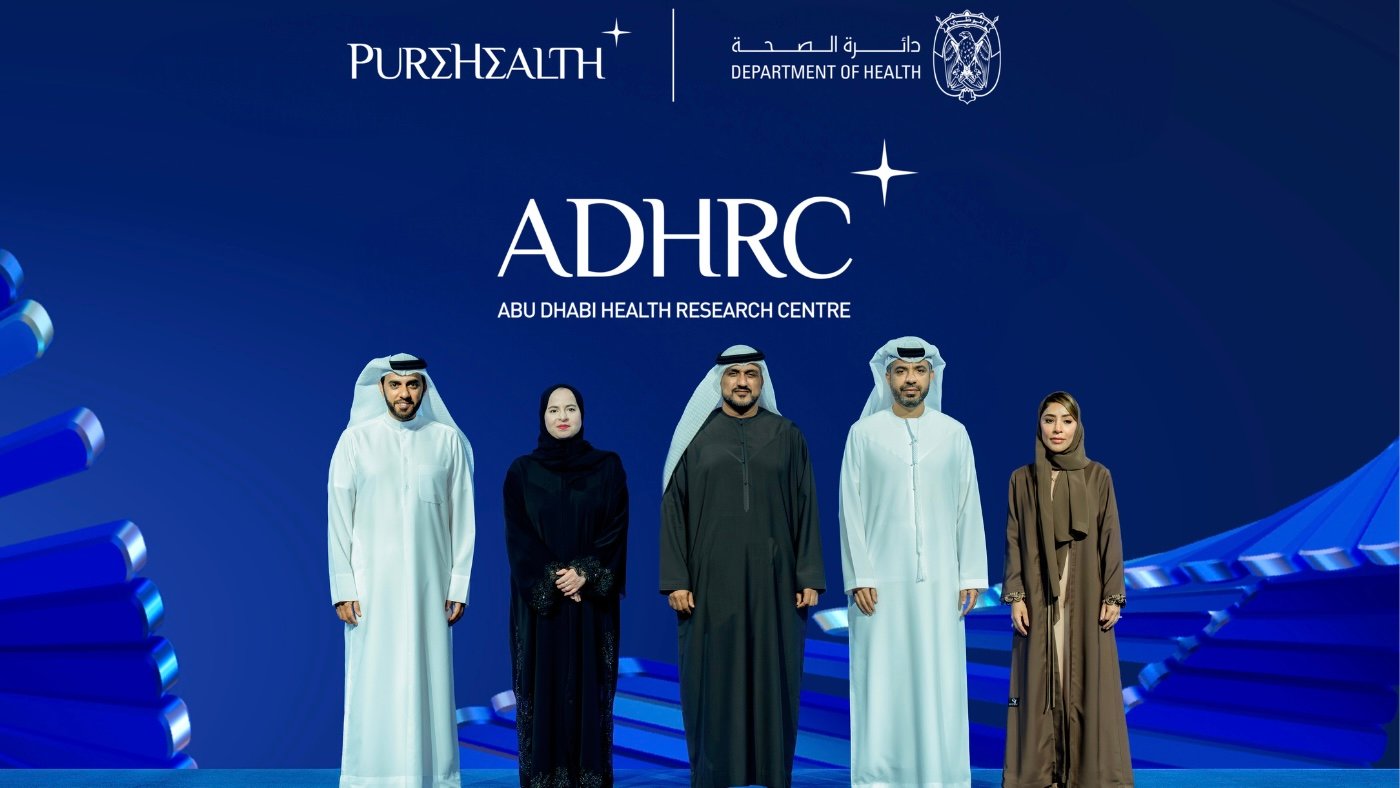
PureHealth has launched the Abu Dhabi Health Research Centre as a unified platform to consolidate its clinical research activity across hospitals, primary care clinics and laboratories in Abu Dhabi. The new centre is designed to bring together research operations that were previously spread across the network, creating a single structure for study design, recruitment, regulation, analytics and publication. For a healthcare group with growing regional ambition, the move is as much about scale as it is about science.
The centre was formally announced at the ADHRC Research Conference 2025, with support from the Department of Health – Abu Dhabi. That backing matters because it signals that the initiative is not just an internal reorganisation but part of a broader public-health and innovation agenda in the emirate. Abu Dhabi has been trying to position itself as a serious destination for life sciences investment, and PureHealth’s consolidation gives that ambition a practical platform.
ADHRC now coordinates research across 16 hospitals, a wide clinic network and advanced laboratories. It includes inpatient Clinical Trial Units and what the company describes as the largest outpatient CTU in the Middle East, with the capacity to manage more than 800 participant visits a day. That scale gives PureHealth an infrastructure advantage that many regional operators do not yet have. In healthcare, trial capacity often decides whether a market can attract international partners, not just whether it can run local studies.
The centre is already supporting more than 100 active studies, with a research workforce of over 700 scientists and more than 300 principal investigators. It also benefits from more than 2,500 specialists and consultants working in fields such as oncology, neurology, precision medicine and artificial intelligence. That mix gives the platform breadth across therapeutic areas and also makes it easier to move from research into clinical practice.
PureHealth says the centre conducts research across 22 therapeutic areas and contributes to more than 400 publications a year. Its focus areas include personalised medicine, rare diseases, cell and gene therapy and neuroscience. Just as important, the centre uses AI and machine learning to process data, identify new therapeutic targets and shorten the time between discovery and patient care. That is a major advantage at a time when healthcare systems are under pressure to be both more efficient and more precise.
One of the flagship projects is Longevity 2.0, which has enrolled more than 3,000 participants and builds on the earlier Longevity 1.0 trial. PureHealth says the first phase showed a 2.2-year increase in healthspan through structured exercise, nutrition and lifestyle intervention. That kind of result gives the research centre a visible example of how clinical science can be translated into broader public-health impact.
For the UAE healthcare sector, the creation of ADHRC is important because it turns clinical research into a strategic capability rather than an isolated activity. Hospitals, biotech companies and academic institutions often struggle with fragmentation, but a unified centre can streamline approvals, boost publication output and strengthen international partnerships. It also helps Abu Dhabi compete for high-value research contracts in a region where medical innovation is becoming more central to economic diversification. The market impact could be significant. Better coordination of trials can attract global biopharma partnerships, support regulatory credibility and raise the profile of the UAE as a research destination. For PureHealth, it also strengthens a long-term strategy that combines care delivery with scientific influence. In a healthcare landscape where data, speed and collaboration matter more every year, the Abu Dhabi Health Research Centre gives the group a more coherent way to compete.