
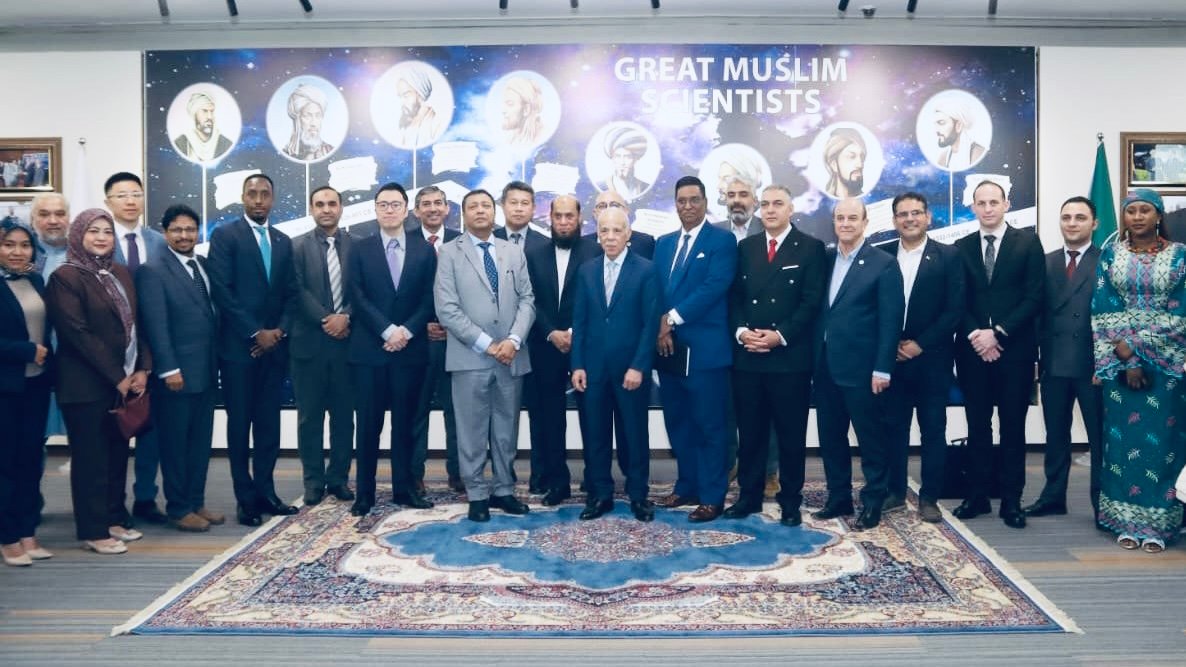
COMSTECH, the Islamic world’s science and technology cooperation body, has partnered with Huawei to launch a regional ICT Academy training 10,000 specialists annually across 57 OIC countries. The initiative addresses critical digital skills shortages threatening Middle East economic diversification, with certified programs in 5G, AI, cloud computing and cybersecurity. Launching with 20 training centers, the academy targets 100,000 graduates by 2030.
The partnership leverages Huawei’s global ICT training infrastructure with COMSTECH’s OIC network spanning Pakistan, Turkey, Malaysia, Nigeria and Arab states. Initial cohorts focus on enterprise networking, digital transformation and smart city technologies, aligning with Saudi Vision 2030, Pakistan Digital Pakistan and UAE Centennial 2071 goals. Huawei provides curriculum, instructors and certification; COMSTECH handles local delivery and government coordination.
Middle East nations face acute ICT talent shortages blocking digital economy targets. Saudi Arabia needs 268,000 tech workers by 2025; UAE requires 100,000 digital specialists. Traditional university programs lag industry requirements, creating $20 billion annual productivity gaps. The COMSTECH-Huawei academy delivers vendor-certified skills in six months, achieving 92 percent employment rates from pilot programs.
Curriculum emphasizes practical deployment over theory, with hands-on labs for 5G base stations, AI model training and cybersecurity incident response. Graduates receive Huawei HCIA/HCIP certifications recognized globally, enabling immediate workforce contribution. Women comprise 40 percent of initial enrollment, supporting gender inclusion targets across OIC states.
For Middle East technology companies, the academy creates ready talent pipelines reducing hiring costs 35 percent. Localized content addresses regional challenges like Arabic NLP, Islamic finance compliance and desert network deployment. Huawei gains market expansion through trusted COMSTECH branding; OIC countries access cutting-edge training without Western vendor dependencies.
The initiative includes C-level executive programs for digital transformation strategy, reaching 2,000 government and enterprise leaders annually. Smart city modules cover UAE’s 90 percent coverage target and Saudi NEOM’s AI infrastructure. Cybersecurity tracks address rising regional threats, with simulated attacks mirroring 2025 Iranian cyber campaigns.
Funding combines Huawei CSR, COMSTECH grants and OIC member contributions. Initial $50 million investment supports 20 centers; self-sustaining model projects via corporate training contracts. Success metrics include 80 percent graduate retention in national digital projects and 25 percent annual skills upgrade for existing workforce.
Regional technology ecosystems benefit immediately. Pakistan’s 5G rollout accelerates with 2,000 trained engineers; Egypt’s Suez smart corridor gains ICT specialists; Morocco’s Casablanca Finance City attracts Huawei-certified talent. The academy creates cross-OIC mobility, enabling Jordanian engineers to support Iraq reconstruction or Malaysian experts to assist Somalia connectivity.
COMSTECH Secretary-General emphasized digital sovereignty through skills independence. Huawei committed to technology neutrality, supporting diverse equipment ecosystems. The partnership positions OIC countries to capture 15 percent regional ICT services market by 2030, generating $100 billion economic impact. For Middle East CIOs and telcos, the academy solves immediate talent crunch while building decade-long capacity. Certified graduates command 25 percent salary premiums, accelerating digital transformation ROI. As first cohort graduates in Q4 2026, COMSTECH-Huawei sets benchmark for public-private skills partnerships across emerging markets.