
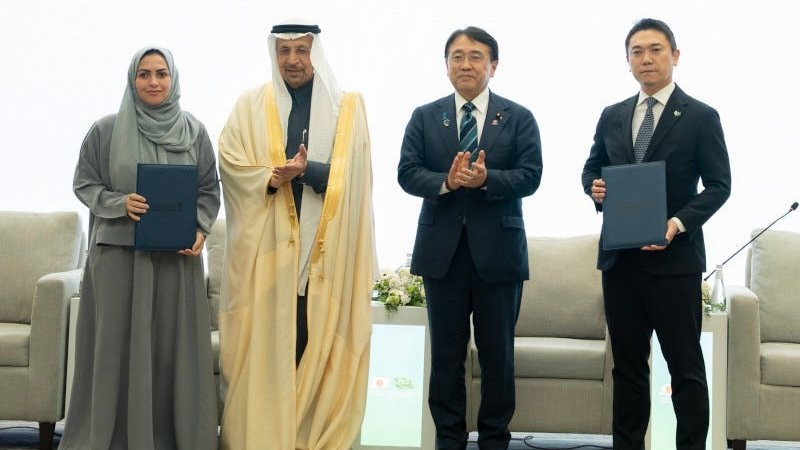
The King Abdulaziz City for Science and Technology (KACST) has signed a strategic partnership with Japanese lunar exploration company ispace to co-develop technologies for Moon missions from the Middle East. The collaboration focuses on rover navigation, resource mapping and communication systems tailored for Saudi Arabia’s harsh desert conditions, which mirror lunar terrain challenges. This marks the Kingdom’s boldest step into commercial space since establishing the Saudi Space Agency.
KACST will contribute AI-driven autonomy algorithms trained on Arabian desert data, while ispace provides lunar landing expertise from its 2024 Hakuto-R Mission 2. The partnership targets NASA’s CLPS program and ESA’s lunar logistics contracts, positioning Saudi Arabia as a key supplier of space technologies. Initial projects include thermal management systems for extreme temperature swings and dust mitigation for solar panels, both critical for sustained lunar presence.
Saudi Arabia’s space ambitions align perfectly with Vision 2030 diversification goals. With $3 billion committed to space by 2030, the Kingdom seeks commercial returns from satellite manufacturing, launch services and lunar resource extraction. KACST’s Al-Uyoun satellite constellation already provides Earth observation data; lunar capabilities represent the next frontier. The ispace partnership accelerates technology transfer, reducing Saudi reliance on foreign providers.
For Middle East technology companies, this deal signals space as the region’s next growth sector. UAE’s successful Mars mission and Qatar’s satellite launches created regional momentum; Saudi Arabia now leads commercial lunar development. KACST’s desert testing facilities in the Empty Quarter offer unmatched analog environments for lunar rover validation, attracting global partnerships.
The collaboration includes workforce development, with 200 Saudi engineers training at ispace’s Japan facilities. KACST plans a Lunar Technology Centre in Riyadh by 2028, focusing on in-situ resource utilization for water extraction and habitat construction. Isspace gains access to Saudi sovereign funds and PIF investment for its Resilience lunar data center project.
Technical synergies drive the partnership’s value. KACST’s AI navigation systems, proven in Rub’ al Khali autonomous vehicle trials, address lunar GPS-denied environments. Isspace’s micro-rover platforms provide hardware integration. Joint IP from the collaboration will target $10 billion commercial lunar markets by 2032, including NASA’s $2.6 billion CLPS contracts.
Regional competitors watch closely. UAE’s MBRSC and Egypt’s space agency may form similar alliances, but Saudi Arabia’s funding scale creates first-mover advantage. The partnership also positions KACST for Artemis Accords participation, securing U.S. technology access and lunar surface rights.
For technology investors, KACST-ispace represents convergence of space, AI and sovereign capital. Saudi Arabia’s $500 billion NEOM project requires space-based monitoring; lunar expertise enhances those capabilities. The partnership validates desert nations as space technology leaders, leveraging extreme environment expertise for extraterrestrial applications.
KACST leadership emphasized commercial viability over prestige missions. Revenue streams include lunar data services, rover leasing and technology licensing. Isspace gains Middle East market entry and sovereign backing for risky R&D. Together, they target 10 percent of global lunar economy by 2035.
This landmark deal elevates Saudi Arabia from space consumer to producer, creating high-value jobs and exportable technologies. For Middle East tech ecosystems, KACST-ispace sets the standard for strategic global partnerships driving national ambition.