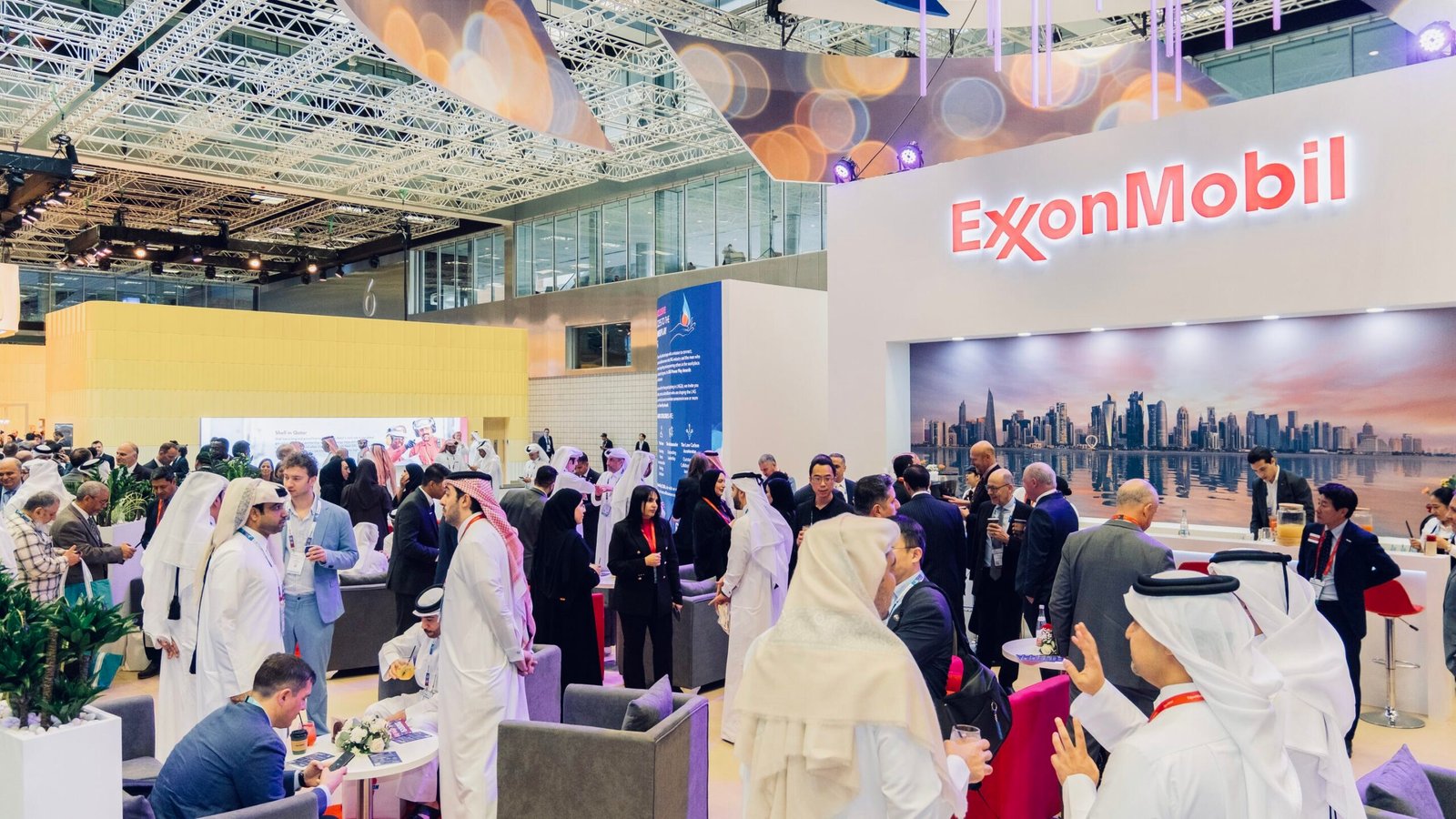
Top global energy groups are using the LNG2026 summit in Doha to reaffirm liquefied natural gas as a core “transition anchor” even as the Middle East faces its worst gas‑supply disruption in years. ExxonMobil, Shell and TotalEnergies are among the largest long‑term partners in Qatar’s North Field expansion, which aims to raise liquefaction capacity to roughly 126 million tonnes per year by 2027, and they are now pushing governments in Europe and Asia to treat gas as a bridge while renewables scale up.
Recent drone strikes on Qatar’s Ras Laffan and Mesaieed industrial complexes have forced QatarEnergy to halt LNG exports for several days, rippling through global supply chains and prompting Shell and TotalEnergies to declare force majeure on some contracted cargoes. ExxonMobil too has flagged that the outage could delay new supply from the North American LNG build‑out if Middle East tensions spill into financing and security conditions. The disruption has exposed how tightly Europe and Northeast Asia rely on Qatari gas, even as the broader energy‑transition narrative leans toward electrification and zero‑carbon fuels.
In Doha, executives from ExxonMobil, Shell and TotalEnergies argue that the current crisis is not a reason to abandon gas but to invest in more diversified, secure LNG infrastructure. They point to planned expansions in the United States, the United Arab Emirates, and East Africa as complementary sources that can share the “firm‑gas” load with Qatar over the next decade. Their pitch to policymakers is simple: retain gas in the energy mix to keep power grids stable while solar, wind and storage expand, rather than risking price spikes and blackouts by cutting gas too fast. Yet this “transition‑anchor” stance is under pressure from climate‑focused investors and regulators. Environmental groups argue that locking in new LNG capacity risks long‑term stranded‑asset exposure and could delay the full shift to renewables and hydrogen. For now, however, ExxonMobil, Shell and TotalEnergies are betting that geopolitical volatility, energy‑security fears and the sheer pace of electricity demand growth will keep gas demand elevated through the late 2020s. As Doha passes the LNG‑conference torch to Brisbane in 2029, the debate over whether gas is a bridge or a barrier will be central to the global energy‑transition script.