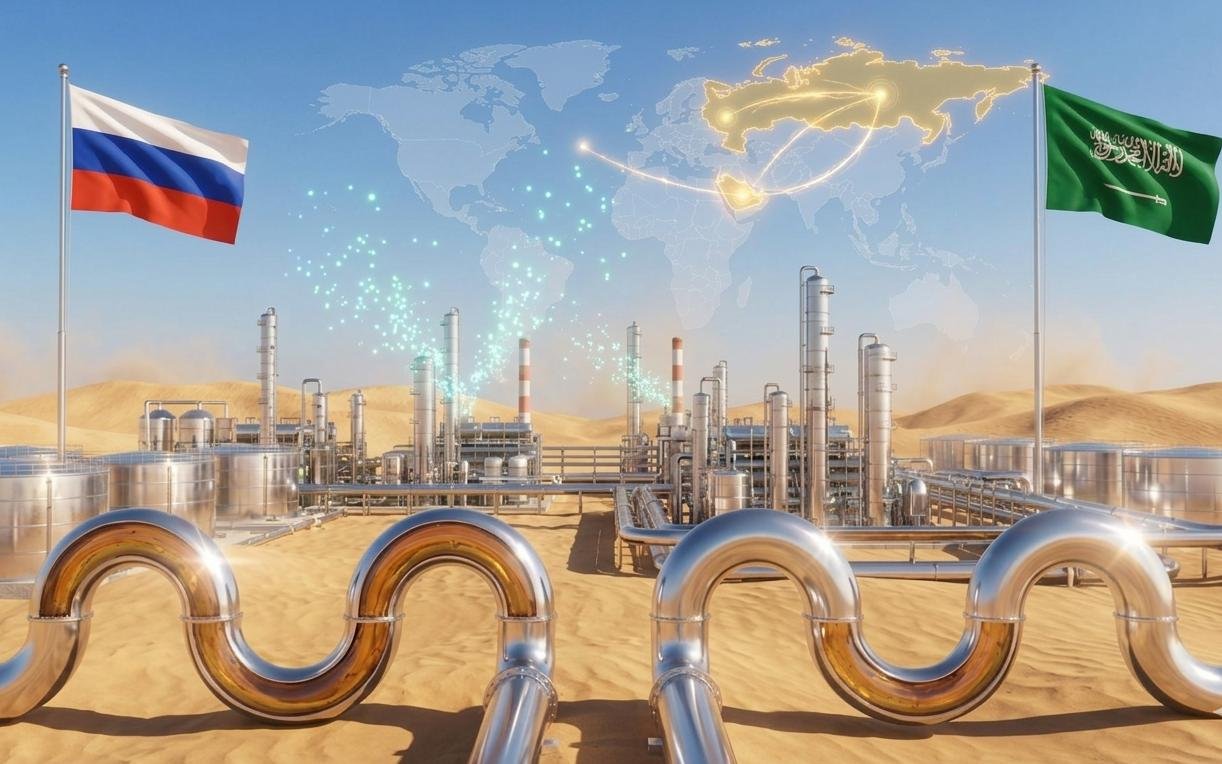
Global crude markets are tightening again as conflicts in the Middle East and Eastern Europe keep delivery routes volatile and traders cautious, prompting Saudi Arabia, Russia and other Gulf oil producers to review their spare‑capacity plans through mid‑2026. The International Energy Agency estimates that OPEC’s spare capacity sits at just over 5 million barrels per day, with Saudi Arabia holding the lion’s share, and now that buffer is being watched more closely as demand in India and China continues to grow.
Saudi Arabia has recently increased its shipments to Asia, particularly to India, where US‑backed pressure to reduce Russian oil purchases has opened space for Gulf barrels. Shipments from Riyadh to New Delhi are on track to hit around 1 million to 1.1 million barrels per day, a level not seen in more than six years and close to Russia’s current share. For Indian refiners, this diversification helps hedge against sanctions risk and shipping‑insurance costs while still keeping crude costs competitive.
In Russia, the picture is more complex. Despite sanctions and discounted pricing, Moscow has maintained relatively high output, but its ability to route crude without disruption depends on complex tanker‑insurance markets and alternative pipelines. As insurers and Western‑linked banks remain skittish around certain routes, Gulf producers including Saudi Arabia, the United Arab Emirates and Kuwait are positioning themselves as more predictable suppliers, even if prices are somewhat higher. OPEC and its allies are now debating whether to keep spare capacity in place as a buffer or to gradually tighten it further. Some members argue that fat spare‑capacity cushions help stabilise prices and reassure importing economies, while others worry that keeping production below maximum levels for too long weakens revenues at a time when governments need cash for energy‑transition spending. For the rest of 2026, the key question will be whether renewed geopolitical shocks or a stronger‑than‑expected global‑recovery will force Saudi Arabia and its Gulf partners to tap more of their spare‑capacity headroom, shifting the world’s oil price curve once again.