
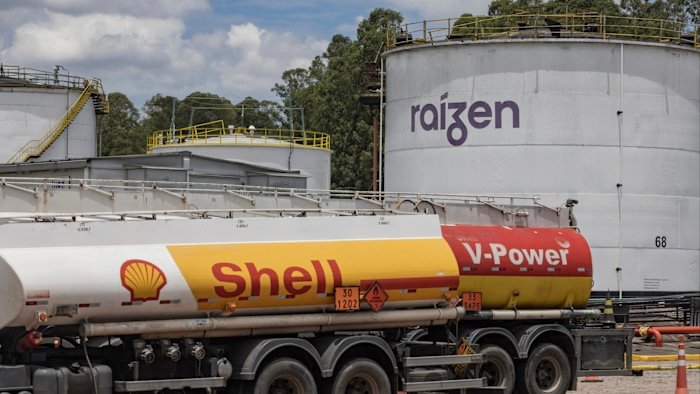
Royal Dutch Shell is poised to deepen its entrenchment in Brazil’s energy‑and‑agribusiness nexus by committing roughly 3.5 billion reais (about $668 million) to its struggling sugar and ethanol JV, Raizen. The investment comes after Raizen warned of “significant uncertainty” about its ability to continue as a going concern, weighed down by heavy capex commitments and poor crop yields that have hit margins and debt levels. For Shell, the move is both a financial backstop and a signal that it still sees Brazil’s biofuels‑and‑fuel‑retail complex as a core part of its broader energy‑transition strategy.
Raizen, jointly owned by Shell and Brazil’s Cosan, is one of Latin America’s largest fuel‑retailers and ethanol producers, operating refineries, a dense network of gas stations and a sizeable sugarcane‑processing platform. Weak weather‑affected harvests and volatile ethanol prices have squeezed cash flow, while the company’s own investments in decarbonisation and logistics upgrades have pushed leverage higher. Creditors and minority‑shareholder groups have raised concerns about corporate‑governance proposals that could split Raizen’s fuel‑distribution arm from its other assets, fearing such a carve‑up would dilute value for certain classes of investors.
Shell’s Brazil chief has said the company prefers to keep Raizen’s integrated structure intact and is ready to shoulder a disproportionate share of the fresh capital required. Under the current plan, Shell’s injection of 3.5 billion reais would be matched by a similar contribution from another shareholder close to Cosan, aimed at stabilising the balance sheet and restoring investor confidence. The move also fits Shell’s global narrative of blending traditional fuels with biofuels and renewables, using established retail networks as a platform for selling low‑carbon transport options.
However, the backstop has triggered questions from some analysts about how much exposure Shell should carry in a highly cyclical ethanol and sugar business. If Brazilian weather patterns remain volatile and ethanol‑to‑gasoline price ratios weaken, the value of Raizen’s assets could fluctuate sharply, testing the wisdom of Shell’s large‑scale commitment. For now, though, the London‑based major is signalling that it intends to stay in Brazil’s energy‑and‑agribusiness intersection for the long term, using Raizen as a laboratory for integrating biofuels into a broader multi‑energy portfolio.